

Dry Techniques
Etching is predominantly based on the use of indirect processes and their mastery can seem somewhat daunting to artists used to expressing themselves through more direct means. The use of mordants and varnishes is, however, only one strand of intaglio printmaking. Direct or dry mark making plays an equally important part. Historically, dry techniques such as drypoint, engraving and mezzotint preceded the invention of etching but all involve the penetration of a hard surface so that it can be printed as an intaglio print. Any of these purely mechanical techniques can be used by themselves or in combination with each other or with etch-techniques to increase the pictorial possibilities.
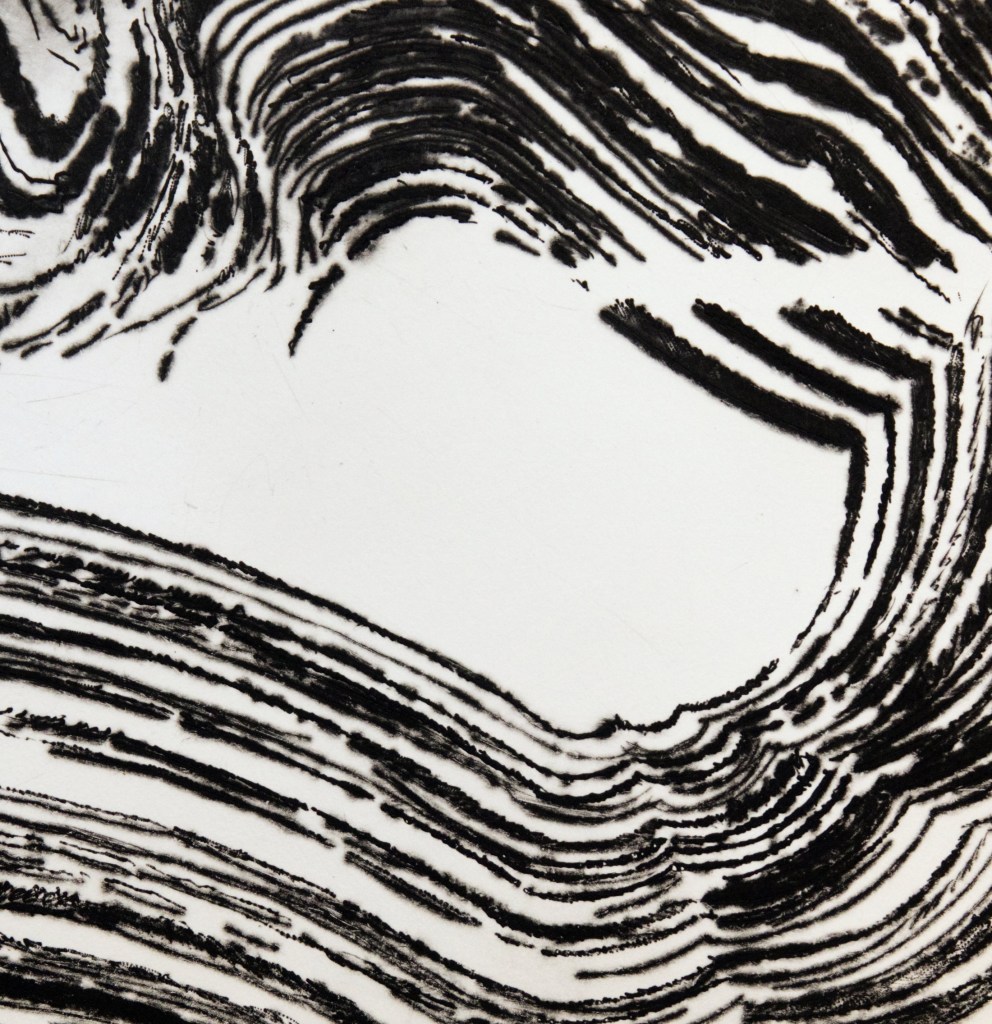
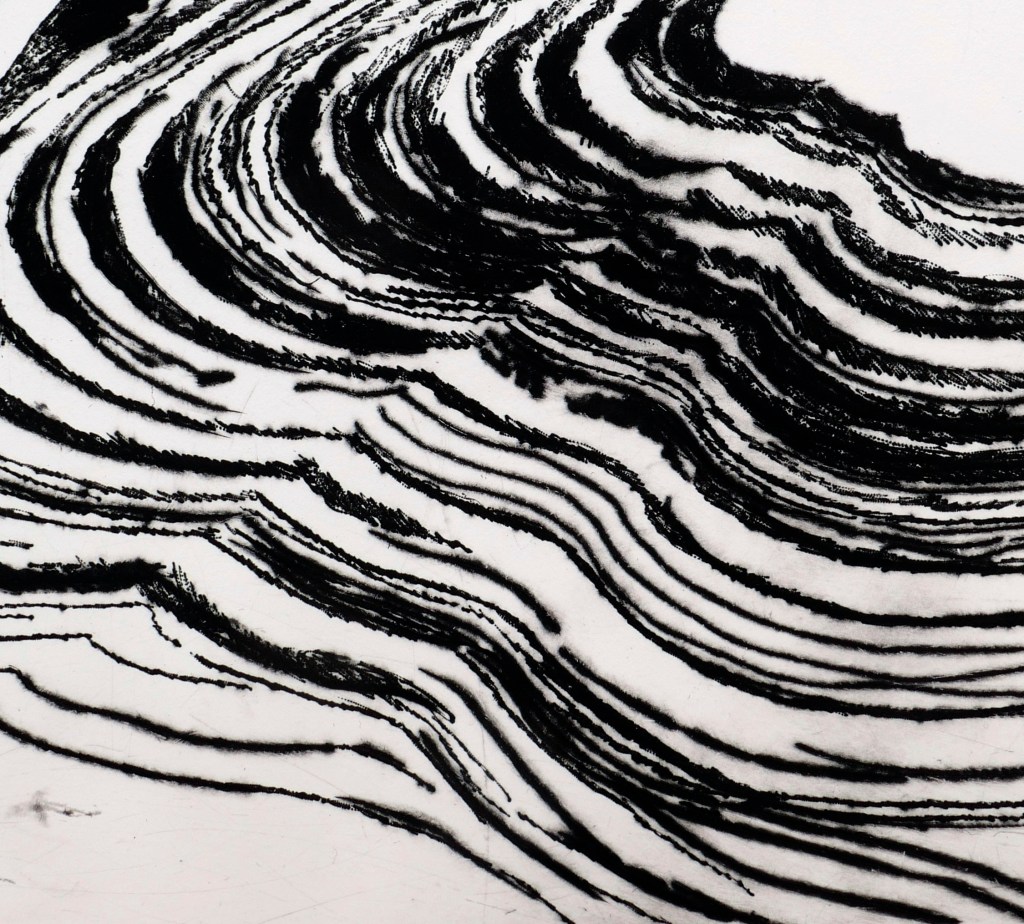

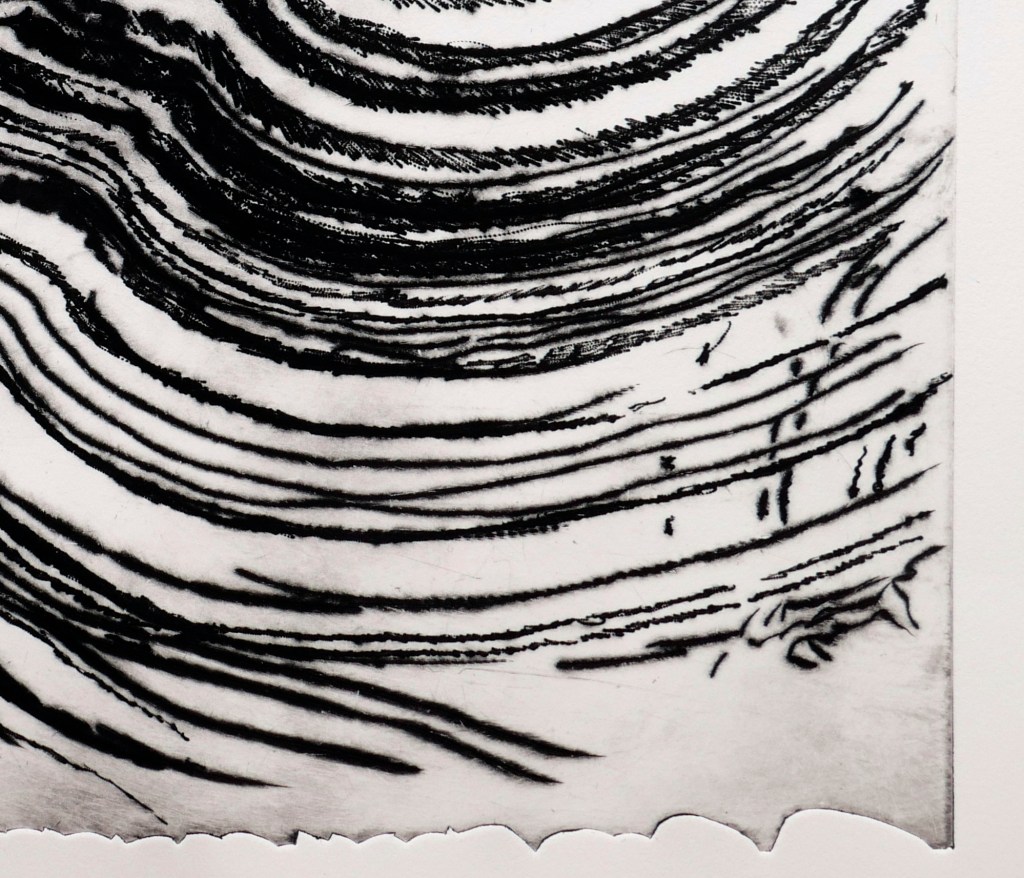
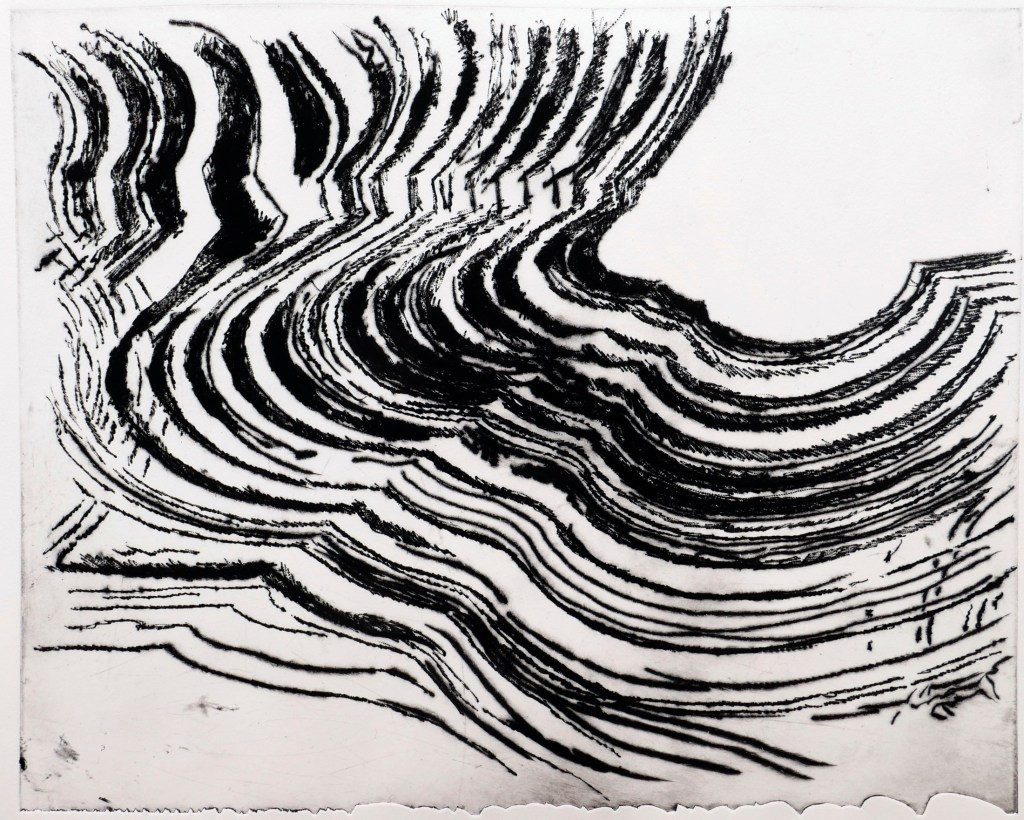
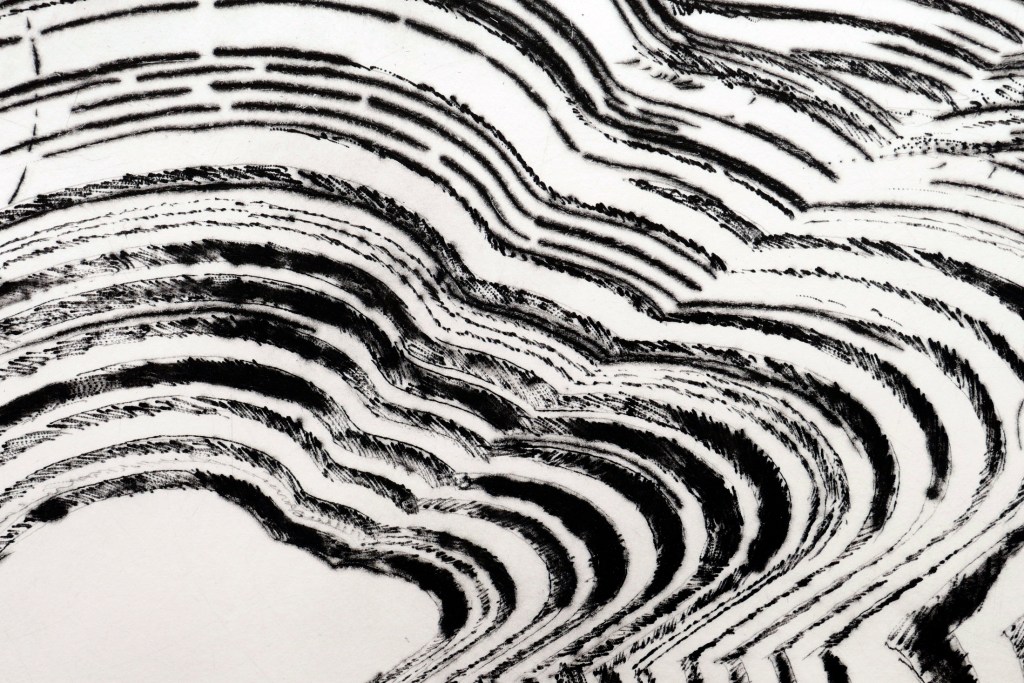

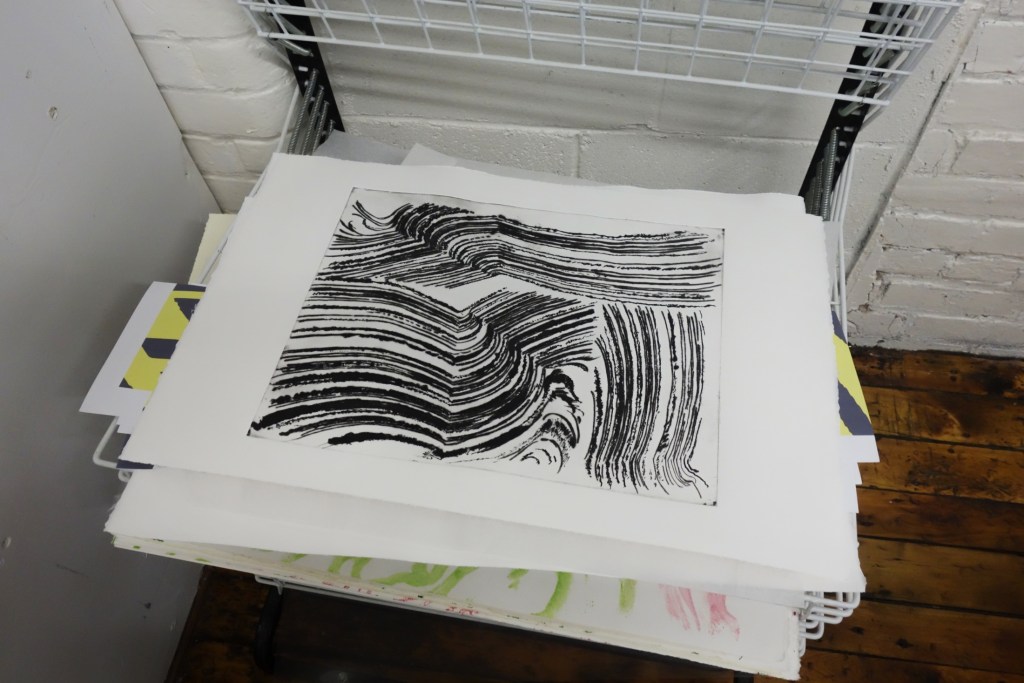


YUN, Friedhard Kiekeben, drypoint etchings, made in 2024 at Zea Mays studios
Traditionally a shiny new metal plate is the sensitive base which will register any mechanical activity taking place on it. Anything that in any way marks, scores or scratches the plate surface can be included in the repertoire of dry mark-making. Sharp pointed objects such as needles or nails will score grooves and raise burrs in the metal and are most useful for linear work. Areas of tone and texture can be produced by dragging abrasive materials such as sandpaper, steel wool or a wire brush across the surface.
Apart from the more improvised equipment, there are a large number of tools that have been developed specifically for intaglio printmaking purposes. Some of these, like the hand held burin, are as ancient as the art of embellishing objects with incised designs; while others, such as electrically powered engraving tools are more recent developments.

mark making samples: carborundum paint (Akua), drypoint needle (right)
Drypoint
In drypoint the artist draws straight onto the metal plate or sheet of plexi or PETG with a drypoint needle. It is a very expressive technique producing lines which can be vigorous, lively or delicate depending on the pressure exerted. Drypoint lines are much less uniform than engraved lines and can be used on their own or in conjunction with a contrasting approach. Rembrandt appreciated the beauty of using drypoint to accentuate other intaglio work – using it to enhance dark tonal areas or to define an outline, whilst Rodin was one of the first artists to use pure drypoint to sculpt powerful imagery on the plate.
When a drypoint needle digs into a plate it throws up a sharp edge called a burr rather than producing a deep groove. It is this burr that holds most of the printing ink and accounts for the unique velvety or blurred character of the drypoint line. It is essential to use a very sharp and durable needle, preferably made from tempered steel. An instrument made from mild steel will quickly become blunt and will not produce the desired burr, merely scratch the plate surface. For the same reason, the needle should be held fairly upright rather than angled like a pencil. A superior but expensive alternative is a diamond-tipped drypoint needle. A fair amount of pressure needs to be exerted whilst drawing as marks made with less pressure will be finer and less velvety. The burr can be removed using a scraper if a line with the quality of an engraving is sought, or an entire area of drypoint work can be completely removed by sanding the plate surface.

Drypoint can be used on all metals suitable for intaglio printmaking and also works on Perspex/Plexi/PETG plates. The main factors to be considered in the choice of material are whether the plate needs to be editioned and to what extent the metal resists the drypoint needle. Zinc and aluminum plates are easily penetrated and give the option to draw more fluid curves. However, these metals are so soft that only a limited amount of prints can be made before the burr is flattened under the pressure of repeated inking and printing. A drypoint composition drawn on copper can be expected to last for at least ten prints, or for fifty or more from plates that have been steel faced. If steel itself is used, editioning should not normally be a problem but the metal presents greater resistance to the needle and produces more angular strokes.
With acrylic based etch techniques it is usually best to apply drypoint (and other mechanical work) after all etching has been completed so as not to damage the raised burr during plate preparation processes and in the corrosive bath. A plate that is to be printed directly from an acrylic surface such as a smooth hard ground or a photopolymer film, is equally suited to dry techniques as a metal surface.

diamond tip and a selection of Dremel tool bits and corresponding printed marks
A 50/50 mix of Cranfield Intaglio and Akua inks was used to make this print. There is enough stiffness in the ink to hold all the ink in the raised burrs, plate tone is possible, and the plate can be wiped to bright white if needed. Cranfield inks are water miscible inks made from linseed oil (traditional consistency) while Akua inks have a modern gum formula that facilitates easy wiping and fast work, and is easier on the plate surface. Akua inks are also ideal for multi plate color projects. (also in Intaglio Type). This ink allows for intaglio printing on papers that have been dampened less than in a traditional process.
The rotary Dremel tools are ideal to draw a wide variety of lines, dots and dashes that hold ink; for most work a low to middle speed is a preferred choice, as lines are cut quickly while noise and particle dust is kept to a minimum, allowing for a pleasant working environment. Always use a dust mask with carbon filter, although plastic dust does not tend to travel far beyond the work surface. For very fine and precise lines a faster speed setting gives best results, and goggles should be worn.
PETG Printmaking Plates
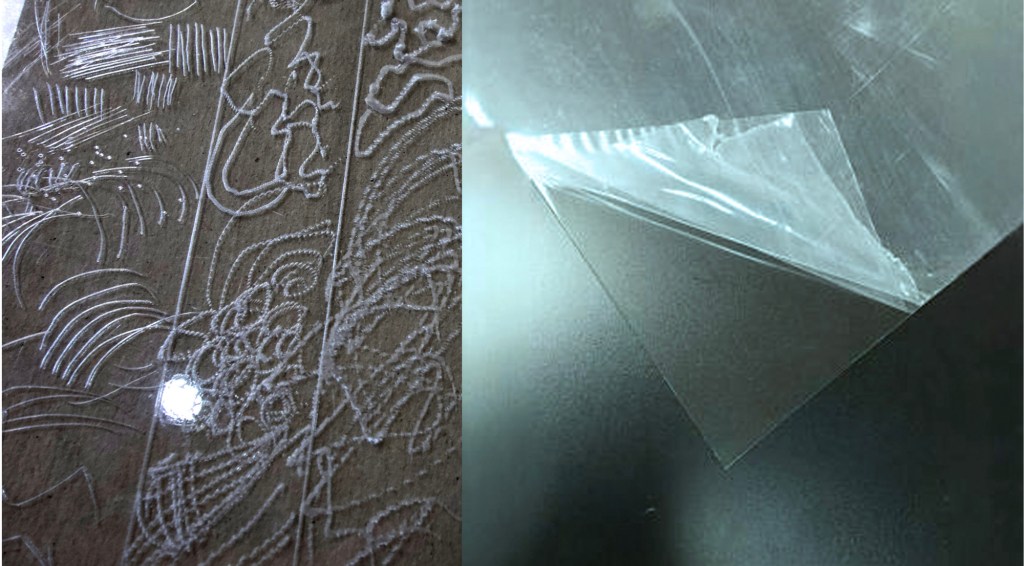
PETG plastic plates were pioneered as an artist’s medium in 2002 by Keith Howard. Many artists and studios now use PETG as a preferred substrate for drypoint etching, monoprinting, Intaglio Type and intaglio printing;
PETG plates have advantages over other materials, especially as metals have become expensive
- reasonable cost,
- clear and see through, this allows for artwork to be placed underneath
- known as the most recycling-friendly plastic
- low toxicity
- holds a perfect drypoint burr that does not wear down easily
- inert with color inks
- does not need bevelling
- perfect for roll-up and monoprinting
- perfect for multi plate printing, due to direct registration
- allows for plates to be printed on top of the damp paper if needed (plate inversion)
PETG SAFETY: avoid exposure to PETG nanoparticles produced during engaving/drawing; use a mask with carbon filter and keep work areas clean, for instance with a hand held vacuum cleaner
Any kind of drypoint technique can be very useful for putting finishing touches to a print. Dark areas of an etched plate may turn out to be a little too faint; some of the etched lines could do to be more prominent; or perhaps the composition requires some unifying element. Rather than having to apply a new ground and re-etch the plate, all these kinds of alterations can be made quickly on the plate with a drypoint needle; without even having to clean the plate after printing.
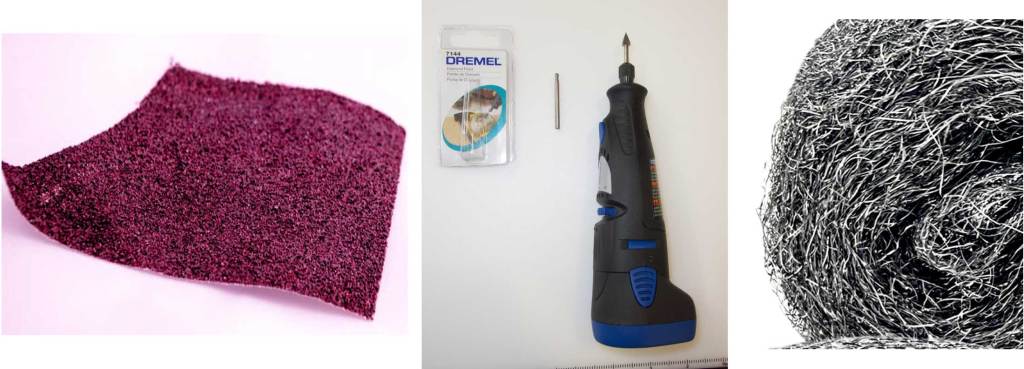
any material that scratches or marks the surface can become an ‘intaglio brush’ in drypoint intaglio etching