
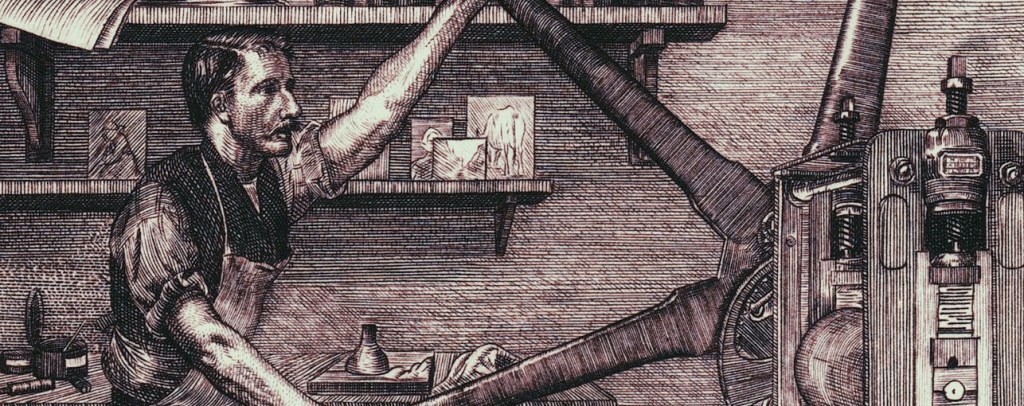
What makes a good etching press?
Design Considerations, Etching Press Safety, Where to Buy
Etching Presses used to be industrial pieces of equipment that are so heavily engineered from cast iron components that specialist movers and installation experts were always required to commission a new or used press in a print studio. Traditional presses deliver the strong pressure needed for traditional etching ink (with stiff linseed oil inks) through the use of cast iron and massive solid rollers, which often brings the weight of even smaller machines to between 250kg and over half a ton. By contrast a modern but strong press with a similar press bed size can weigh between 45kg and 100kg.
This makes anything to do with moving presses a dangerous and costly specialist process, and once installed presses dominate a studio environment and any further move or relocation brings new obstacles. At the same time the presence of old heavy presses probably ensured the longer term survival of many print departments.
Since the early seventies metal and machine fabricators started experimenting with more light weight modern designs for etching presses, with a varying degree of success. Some cheaper models from about 40 years ago were known to break easily and weren’t thoroughly engineered, so artists tended to prefer going to a print shop that provided access to a heavy traditional press, which would often last many decades or in the case of cast presses, even centuries.
Over the past four decades press engineers around the world continually experimented with improving more light weight, cheaper, and more easily transportable press designs, and overall the quality of ‘accessible’ etching presses has greatly improved. Some key factors contributing to this are:
- Common use of composite resin-based press beds to save weight
- Use of new types steel and aluminum alloys or cast aluminum or toughened steel frames for the center frame of the press
- More light weight but strong and rigid support structures; the center column today is often made from cast aluminium or hardened steel.
- Improved bearings; brass or bronze bearing blocks make by far the best support for etching press rollers, at a price. Some modern press designs achieve equally good results through specialist ball bearings, but ball bearings on some cheap models may be prone to early failure.
- Solid or hollow but rigid and reinforced press rollers
- Components that are more easy to ship and assemble
- The availability of water miscible low pressure etching inks such as Akua or Cranfield
- Light weight gearing systems through gears or chain drive reduction
- Presses made from off-the shelf machine parts often don’t perform very well. Most good presses have a highly customized design and custom engineered parts to ensure all parts of the machine work in synergy
- Press designs change every few years or so, and some very skilled smaller manufacturers eventually go out of business; if you really need one and and see a good press, consider buying it, and it is better to pay a few extra dollars. A well chosen press can be a lifetime investment, even if the cost of purchase seems high.
- Today, there are many ‘generic’ online only etching presses, but overall we recommend choosing machines made by smaller, well established press manufacturers who may offer a long warranty and full support.
- Presses that have a driven top roller (direct drive, or with attached gearing) are generally considered premium equipment because the press glides onto the etching plate by itself, preventing slippage, especially in color printing; but there are more engineering challenges and cost if always higher. Only a few manufacturers such as Stark , Arteina , or Polymetaal offer top roller driven models which are considered the ideal choice for thick plates or multiple late color printing.
PRESSES AND SAFETY
Due to their weight and moving parts most etching presses are inherently dangerous, both in use and transportation. Careful and informed use is essential.
Press beds that are not secured in the press may fall out and cause injury. Either fit press bed stops or cushion the bed on either end. Manual presses are relatively safe to operate because moving rollers are easy to stop by the user. Some presses can create a ‘flywheel’ effect which can be very dangerous due to fast moving wheels, cranks, and press beds. Avoid!
Motorized presses are much more dangerous because they may be hard to stop during an incident. Today, motorized presses need to be fitted with automatic sensors to stop the press motion. Moving presses involves heavy lifting and needs to be done with care, often specialist lifting gear, ramps, or palette lifters are needed. Use two or three strong people to move a press or press parts.
If you have specialist skills, consider purchasing an older or disused press such as the discontinued makes like Charles Brand, Breisch & Rauh, Ettan, Wheelan, or Praga, and refurbish the press.
Below is a list of some key press manufacturers currently on the global market; shipping costs fluctuate, and can be prohibitive on the heaviest presses. Press designs up to about 70kg are relatively easy to ship.
PreAsion and other Chinese presses / internet brands sold online on Amazon, Etsy etc. There are some well engineered designs for small and medium sized presses, but certain parts may be weak and may fail; make sure there is a full manufacturer’s warranty.
Relatively light weight innovative press designs
Mass market presses that are engineered well enough for professional or school use
Fome and ABIG presses; better than the cheapest online brands
Presses are easy to handle, feature a heavy cast-iron frame, and have a reduction-gear drive for easy feeding. Holbein presses are ideal for schools, studios, and professional artists alike
Innovative and well designed professional etching presses from Spain
A long established press manufacturer from India, solid engineering with good value
Etching Presses and Art Equipment from Tokyo
Offering some of the best cost effective well engineered presses as well as large professional presses; some very innovative design ideas in the upper level models
A premium manufacturer of printing presses; some of the medium size models are good value considering the very high quality of engineering
A premium manufacturer of printing presses; excellent options for customization
Highly professional printmaking presses; at a cost | especially the large floor standing models give very reliable control to artists over the printing process by manual feel and without automation
Highly professional printmaking presses
Branded, well engineered presses for a mass market; many similar boxed models are unbranded and may have defects
Premium presses from Australia
Solid, modernist press designs
The presses can be used for Metal plate, Wood Block and Lino Printing
an affordable South African press design that is portable and serves for light work loads; one of the best small press designs; offering good pressure control via the solid hand wheel. Make sure the press bed is secure and does not fall out.
Italian press designs
Etching presses from a German manufacturer
A suitable replacement for a two roller press if used with Akua or Cranfield WB ink, low wetting, and light pressure
WUXI VOKEDA TECHNOLOGY CO., LTD
Very large automated hydraulic etching presses from China
Designs and builds direct-drive, geared, and motorised Gunning etching presses (operating since 1980) with stainless steel top rollers and models ranging from tabletop presses to large geared units
Handmade in the UK since 1979, offering bench-top, portable, and studio etching presses (such as the Piccolo, Pequeno, Boxer, and Kudos) with steel or stainless steel rollers and optional stands
Etching presses (such as the EP2412 through EP5629 series), relief presses, and studio equipment along with restoration and relocation services
Harry F Rochat Ltd
Fine art etching presses, Albion presses, and traditional printmaking and bookbinding machinery, as well as offering refurbishments
Designs and builds UK-made geared etching presses (405, 545 Printmaster, 750, and Portable models) featuring a 4:1 gear ratio, vernier pressure gauges, and optional stands and blankets
Boesner / Signum
Professional etching presses; especially large models are more significantly affordable than American models