

David J Reed, ‘Ah Sake’, one of the first four color intaglio prints using ImagOn film (RIT research, 2001)
Intaglio Type
The Birth of a new Printmaking Medium
Photopolymer Printmaking
Intaglio Type: Keith Howard’s
breakthrough in
Intaglio Printmaking
In the early 1990s the Australian Printmaking Innovator Keith Howard was introduced to a new kind of photo etching resist by his fellow artist Mark Zaffron.
Instead of toxic photo emulsion, this material ?? DuPont ‘Riston’ film ?? was dry photo-polymer film from the electronics / printed circuit board industry.
This pioneering new material had been in use in electronics since 1968, and its invention was closely associated with the advancement of electronic products.
Zaffron experimented with the use of Riston as an etching resist, (this use mirrors its intended industrial application for etching circuits into copper), but Howard went down a completely new route.
He realized that the film itself could provide a new kind of printmaking medium, if sandwiched onto a hard substrate. ‘Non-etch’ etching was born!
Traditional intaglio printmaking cannot produce the kind of full photographic color achieved in other print media. In the year 2000 Keith Howard and his colleague David Jay Reed set out to change that fact.
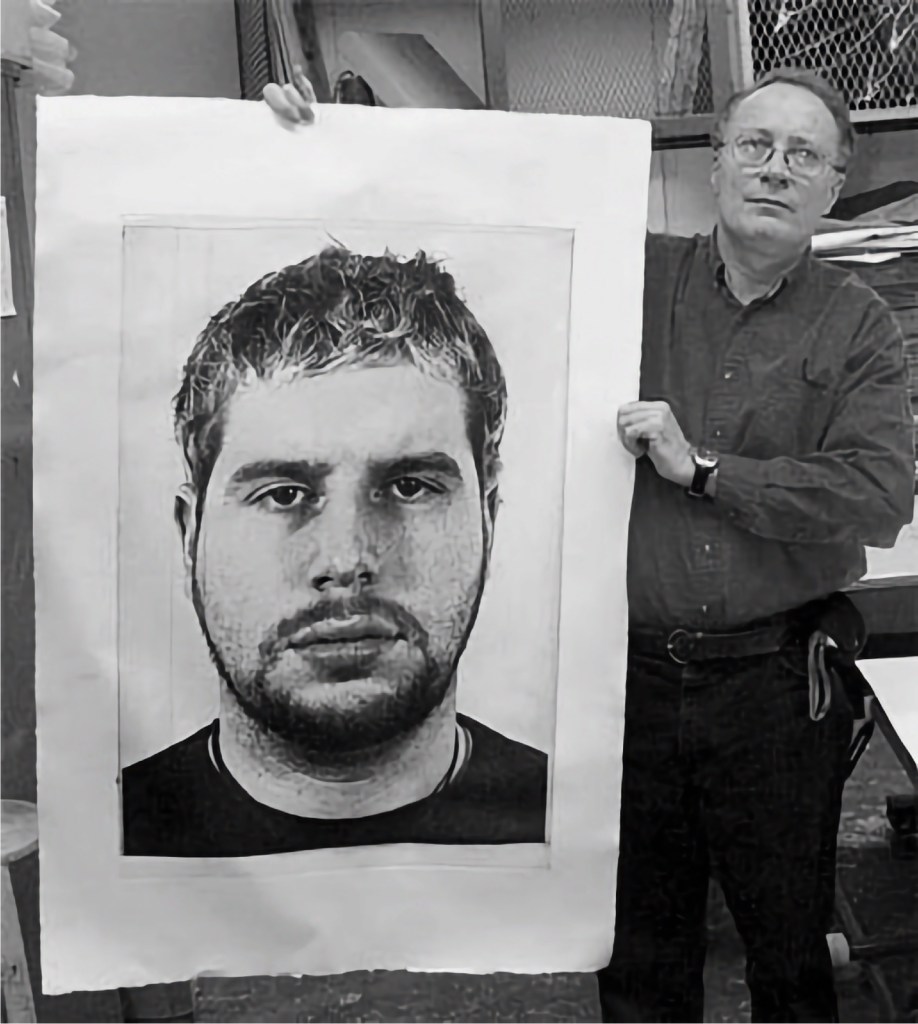
Through a new collaboration at the RIT printmaking lab, a number of Intaglio Type techniques were developed that bring photographic realism to the intaglio medium – in full, glorious color.
In a similar manner to screenprinting or offset, a set of primary colored plates is made from color separations and then overprinted, on the same sheet of paper, to produce the full spectrum of colors. The fact that these prints are made in the intaglio manner gives a tremendous richness and saturation to the resulting image.

Many artists, private, and professional Printmaking Workshops around the world today practice and celebrate Keith Howard’s new medium, and continually expand the creative scope of this new form of printed art. Somewhat confusingly, a number of different generic terms are used, including:
Intaglio Type Printmaking
Photo-Polymer Printmaking
Photo-Polymer Gravure
Non-etch Photo-Polymer Printmaking
WHERE TO BUY FILM?
2021 Update: Today, artists can draw on a wide variety of suppliers and sources to obtain the dry photopolymer films needed for printing in the Intaglio Type manner. Giant corporations such as DuPont or Hitachi produce master rolls that are hundreds of yards long and cost thousands of dollars. Only few of the artist/printmaking suppliers carry established and road-tested film, but main online vendors, small scale suppliers, and electronic parts firms fill in the gap, providing an abundant source, if you know where to look. For example, now, even Walmart Online sells dry photopolymer film!
Below is a list of dedicated suppliers of different kinds of photo-polymer film, and some of the industrial sources include electronics giants such as Hitachi (Photec film), DuPont (Riston Film), MacDermid Enthone, amongst others. Typically, printmakers and studios research the kind of film that is locally available to them and works best under their own specific conditions.
Takach Press Fine Art Printmaking, US
scroll further down for more sources of film
(please contact us if you wish to be included here, or if you wish to share updated research)

S H E L F L I F E , P R O C E S S, A N D H A N D L I N G C O N S I D E R A T I O N S
Dry photopolymer polymer film is a delicate high-tech emulsion of light-sensitive acrylates, held between two layers of mylar.
FILM ALWAYS NEEDS TO BE FRESH.
Old film supply loses the ability to register subtle graphic information and delicate halftones… the film then is still usable but becomes hard and contrasty. Generally, film supplies should be used within TWO YEARS of purchase. Good suppliers frequently check the current film SDS, ensure their master rolls of film are fresh, and ship the film in thick black light-safe packaging. Also, rolls that are rolled too tightly can damage the film, lead to cracking, flowing, or wrinkles.
Like any other darkroom material, the film needs to be kept away from daylight at all times. Any stray light will pre-expose sections of film.
U S E Y E L L O W S A F E L I G H T : any white light source that is covered with a yellow gel or plastic film can be used (clear film or glass painted yellow also works).
When handling film, during lamination, exposure and development, until drying the developed plate. Examples for exposure sources include: cheap 500-100W halogen lamps, UV LED curing lamps, THE SUN, mercury vapor or metal halide exposure units, or photographic flood lights (500 Watt or more).
A vacuum frame is useful but not essential. Artists also get good results by using thick sheets of glass as a contact frame. The use of an aquatint screen (Dove screen is best) is highly recommended to get tone and rich blacks. (Takach / Boegh). After development plates can be sun-hardened or exposed further, to help cure and harden the plate fully.
The Photopolymer Gravure Art and Photography of Henrik Bøegh. by Friedhard Kiekeben, 2018 | The Danish artist Henrik Bøegh is known as one of the most prolific advocates for safer printmaking.

The NEW Color Intaglio Type
Keith Howard’s new full color photopolymer process involves the use of digital halftones made on an inkjet printer, thin transparent PETG plates that serve as the matrix for ImagOn film, and crucially, a new method of registering plates through the inverse placement of the plate on the press bed. The fact that the plates are transparent allows for the perfect sequential alignment that is required by a multi-plate project in full color. The result is a stunning new intaglio aesthetic.
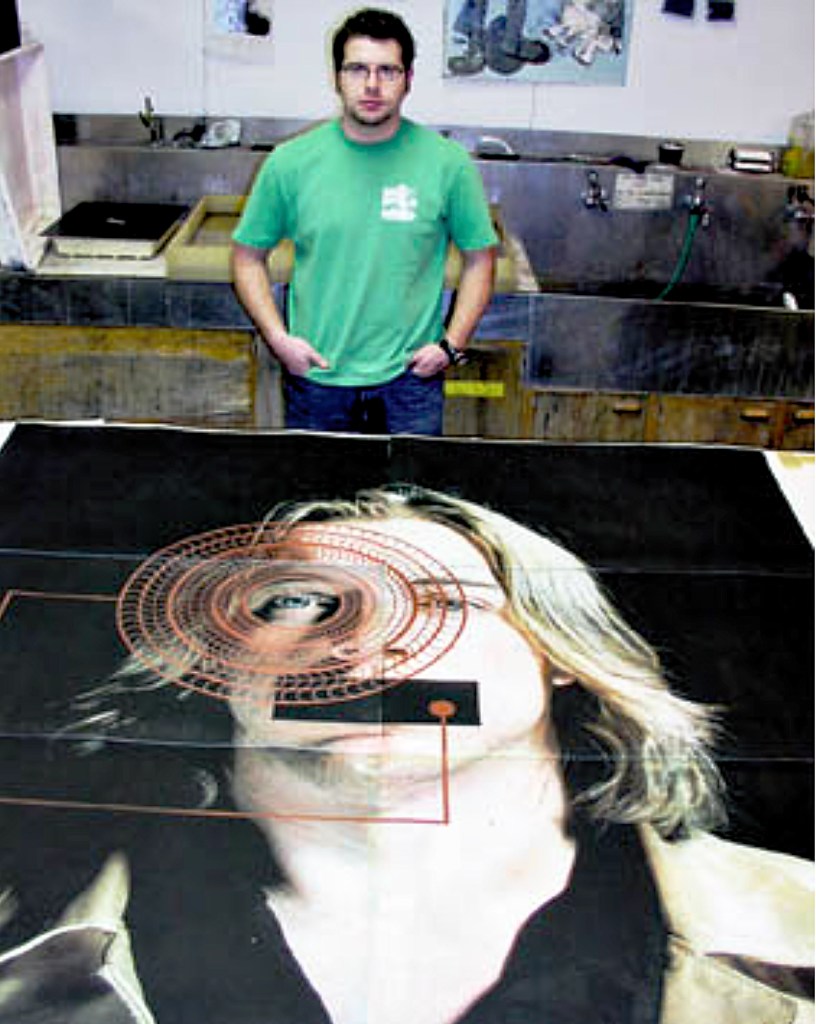
Adam Worth, RIT, large-scale color Intaglio Type,

Susan Groce ‘Invasive Species’, Intaglio Type Assemblage

Keith Howard, Munch’s Scream Missing, 2006
A quick guide to photopolymer printmaking
The Film: choices and considerations
Most printmaking suppliers stock photopolymer film such as ImagOn, Photec, DK3, or Skylight film (see list given above). You may also want to research your own source of circuit board film – it may well be suitable for the process. During the Pandemic new suppliers of small rolls of film have sprung up, to serve the global cottage industry of experimental circuit board makers. You can now buy photopolymer film at any electronic parts retailer, or on Amazon, EBay, or Walmart.
The large Manufacturers whose industrial photo-polymer films were successfully used for printmaking in the ‘IntaglioType’ manner include Hitachi, DuPont, and MacDermid Enthone, and there are other industrial PCB film producers whose products are also suitable for the process. Since 1994 we tested various kinds of photo-polymer film also from lesser known sources, and most of these gave satisfactory results. The main difference lies in the film thickness (thicker is better for non-etch printing and gives better blacks, thinner film is better for etched applications), as well as in lamination method and development characteristics. Some films give ‘harder’ results while others have a greater tonal range, but these differences are not as pronounced as with traditional photo-emulsions. Also, some kinds of film even expose well with a strong daylight light source, such as high wattage photo floodlights, while others only give good results from a UV light source or exposure unit. Most exposure units are adapted from offset plate makers.
Artwork: from photographic to hand-made and gestural
Use any kind of black or tonal artwork created on a clear transparency. A wide range of positives is suitable for the process: use a photocopier, inkjet printer or laser printer for reprographic stencils. The more opaque the marks the better, you may double up copies to obtain a better transparency. Follow expert instructions on how to make high definition transparencies (websites listed at the bottom of the page). Alternatively paint and draw on Mylar using waterproof felt-tip pens, crayons, acrylic, or toner washes.
Photopolymer Film vs. Plate: Safety Considerations
It is important to note that photopolymer films used in the circuitboard industry
are based on different – and proven to be safer – polymer chemistry than the often much older (and volatile) chemistry of photopolymer plates from flexographic industrial printing for the packaging industry. Both films and plates can look similar, and to printmakers seem to facilitate a similar type of relief or photo intaglio effect, but should be regarded as quite separate materials and processes. How to tell them apart? One key feauture of photo-polymer films is that typically development of the laminated plate is done in a sodium carbonate solution, which also adds to safety through ‘saponification’ of monomeric compounds. Typically, flexographic plates, by contrast, develop in water, and may leave significant amounts of monomeric chemicals and VOCs, even
benzene and heavy metals, dissolved in water, leading to potential airborne exposures. The inventors of photo-polymer film for electronics, the company DuPont, say to have done long term studies on the health and safety of their ?Riston?-type film products, monitoring their industrial use over decades. DuPont claim to have found little evidence of very serious health effects in their studies, other than incidents of sensitization, or some allergic reactions. There are many types of photo-polymer film, and some (cheaper?) brands may possibly present health hazards more serious or significant than this. Good ventilation, gloves, and some kind of respiratory protection are always advisable when using any kind of acrylate, or monomeric product.
Photopolymer films have been used in the printed wiring board (PWB) industry since 1968. During this time, safe handling and operating practices have been developed, resulting in a long and favorable safety experience. (DuPont, 2008-2019) This technical bulletin is an overview of the health and safety issues that may arise in the handling and processing of DuPont photopolymer films
Handling Procedures for DuPont Photopolymer Films TB-9944

MASTER PRINTERS
Karrie Swanson and a team of RIT grad students collaboratively printing sets of full color intaglio type prints (plate inversion method)
use of a mask with carbon filter is advised when handling and processing photopolymer materials; as is practiced in PCB manufacturing
METHOD
Prepare the plate as follows:
1. Evenly sand a metal plate/ thin PETG or Plexi plate, or similar
2. De-grease the plate with dish soap or Comet
3. Rinse well then dry
4. Cut a piece of film slightly larger than the plate
5. Peel back the soft layer of clear Mylar (use a piece of sticky tape as an aid)
6. To DRY laminate, sandwich the plate and film (emulsion side down) between sheets of newsprint, cover with opaque smooth paper, and run through the press, preferably twice.
To WET laminate (which gives the best results) immerse the plate and film in a water bath, then place onto a glass surface and squeegee from the centre of the plate outwards.
7. The emulsion is heat and pressure sensitive so heat the plate now with a hairdryer or heat gun on the low setting or use a lightfast drying cabinet
8. Immerse the plate and film in a water bath then squeegee for the best lamination
9. Trim the plate edges with a blade or scissors
Expose the plate as follows:
Aquatint screen exposure (non-etch)
1. Turn on the Exposure Unit.
2. Place the plate with the emulsion facing the light source on the bed
3. Cover with a suitable random dot aquatint screen (see AQUATINT SCREEN)
4. Expose for about 10 to 15 Light Units; this should yield a good black. If in doubt use the Howard testing method for exact determination of the screen exposure (The Contemporary Printmaker, Write Cross Press 2003).
5. Close the lid of the exposure unit and engage the vacuum pump
6. Press start to expose
The light exposure will now convert the semi-liquid monomers of the acrylic polymer emulsion into hard plastic. All areas that are covered by marks will stay soluble and will wash away during the development process. In a sense the process equates to traditional acid etching of a metal plate, only in this instance it is the polymer emulsion that is being eroded to create the intaglio printing surface.
Image Exposure
After following the steps outlined above, remove the aquatint screen and repeat the procedure at a slightly lower setting for your artwork (about 7 to 10 Light Units tends to work well). A homemade set up using photo floods would require longer exposure times, say 5 minutes for the screen and 3 minutes for the image.
Halftone
If your transparency is a halftone made especially for this process no aquatint screen exposure is required (about 7 to 10 Light Units tends to work well).
METHOD
Develop the plate as follows:
The standard developer for photopolymer films consists of a mild solution of sodium carbonate in water.
1. Make up the developer using a ratio of 10g of sodium carbonate crystals per 1 liter of water – this has been successful in many print shops. Always make sure there is ample developer in the bath, say 5 liters or 1.5 gallons. This ensures that plates develop well.
Plates tend to be under-developed if there is an insufficient volume of developer in relation to the surface of the plate. Follow Keith Howard’s advice on making up a developer and testing the water for perfect results.
2. Place the plate face-up in the bath and develop for 9 minutes. If you decide to agitate the plate or brush it with a sponge development will be quicker but more intuitive. A slightly under-developed plate can always be proof printed and then redeveloped for perfect results.
3. After 9 minutes rinse the plate with water, then spray with a mild vinegar solution to stop development and stabilize the plate.
4. Now, quickly blot the plate then blow dry it until the plate surface feels hard
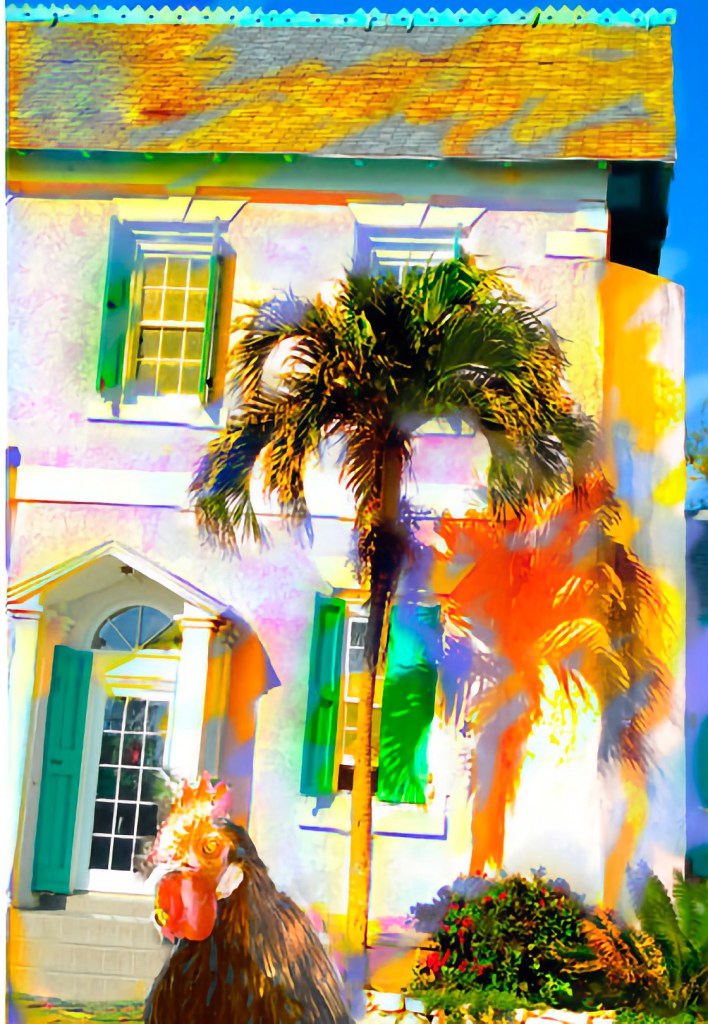
KEITH HOWARD : Color Intaglio Prints from the Bahamas
METHOD
Print the plate as follows: click on image for a slide show
1. Bevel the plate (very thin plates may not require bevelling)
2. Print the plate in the usual intaglio manner using oil-based etching ink or the new Akua waterbased intaglio inks (these are easier to wipe). After squeegeeing on the ink use scrim (tarlatan) to remove the bulk of the ink. Then do most of your wiping with newsprint or yellow pages, using a flat wiping action. All or most of the ink should be removed from the surface making the image fully visible against the blue polymer surface. Make sure you clean the underside of the plate as well the edges to ensure a clean print.
RIT grad students registering an ImagOn plate
NEW METHOD
Keith Howard’s new “upside-down” method of printing transparent plates using waterbased ink, allows for perfectly registered full color intaglio prints (also see PERFECT REGISTRATION for pin registration). Keith Howard gives a guide to his Color process in a dedicated pdf fact sheet. Go to The AKUA/Speedball web site for details. You will find the guide as a pdf download under ‘Articles’.
Photopolymer Film:
A ground breaking new Printmaking Medium adapted for artists from uses in the Printed Circuit Board and Electronics Industry.
note: some kinds of film may currently be unavailable (Howard/Zaffron films), but there are plenty of alternative sources | some of the industrial suppliers/manufatcurers include (PCB / electronics industry):
UPDATE, for individual printmakers, 2021:
1)
DuPont Riston Film can now be purchased on EBay.com, in smaller quantities. This type of branded film has been used safely in Intaglio Printmaking for three decades, and was Keith Howard’s preferred film since 1994.
—- when searching Ebay, look for:
( High Quality Photosensitive Dry Film Photoresist for PCB DuPont Riston MM540)
2)
This film is tested for printmaking purposes, and comes in professional packaging. The larger roll width suits larger projects.
SKYLIGHT (company quote)
“A thicker film for non-etch photopolymer intaglio. Develop film with soda ash. Thick enough to print with excellent density but not so thick to cause problems common with thicker films. Apply to acrylic or metal sheet. Expose, develop and print. Detailed instructions for exposure calibration, Quadtone, RIP, Computer-To-Plate calibration and processing included. Achieve fast, amazing results with our unrivaled processing system!”
Please select size and shipping destination, price includes USPS Priority shipping. Available in 2×10 or 2×50 foot rolls.
3)
Amazon or Walmart,
– look for:
‘PCB Photosensitive Dry Film for Circuit Production Photoresist Sheets’
(typically rolls are 30cm wide, and inexpensive)
NOTE:
This is a great way to experiment with the medium without having to buy large amounts of film!
SAFETY NOTE, 2021:
there are many new online vendors of photo-polymer for circuit board making, selling cheap, unbranded films from China. According to our experience, these non-branded acrylic films are likely to be based on a toxic chemistry, as opposed to established branded films such as ‘Riston’ or ‘Photec’ films which have established and well documented safety documentation. According to some user reviews often these unbranded films are faulty, contain VOCs and do not work as required.

some Industry Links:
Hitachi Chemical – (Photec, dry photopolymer PCB film)
http://www.hitachi-chem.co.jp/english/products/pm/
DuPont – (Riston, dry photopolymer PCB film)
https://www.dupont.com/electronic-materials/dry-film-photoresists.html
MacDermid Enthone (electronicsmanufacturing)
PHOTOPOLYMER.COM – A PROFESSIONAL RESOURCE FROM THE PCB INDUSTRY
http://photopolymer.com/photoresists
Photoresists
(quoted from Photopolymer.com)
“…Photoresists are photosensitive materials which after photoimaging and subsequent processing,resistaction ofcertain chemicals in desired areas.They are basically of two types.In negative photoresists,light-exposed areas become less soluble as a result of crosslinking or photopolymerization,leaving behind, after etching and stripping of the resist,opaque features on a clear background.On the other hand, in positive photoresists,the light-exposed areas become more soluble. The photoresists are available in liquid as wellas dry film form.They may be solventor aqueous developing types.”
“Historically asphalt was used as a photosensitive resistmaterial. In time, itwas replaced by dichromated colloids including gelatin,casein etc. The first photoresist based on a photopolymer was invented by Eastman Kodak in late 1940s. This negative photoresist was based on a synthetic photopolymer,polyvinylcinnamate, in a solvent solution. Crosslinked polymer was insoluble in solvents such as xylene and chlorohydrocarbons which were used as developers after UV exposure. Need for lower viscosity products led to developmentofnegative resists based on cyclized polyisoprene. These photoresists were instrumentalin the incredible growth of printed circuit industry and subsequently integrated circuits used in semiconductors.”
“Pollution concerns led to developmentofdry film photoresists which grew out of DuPont’s work on photopolymer printing plates. Dry film photoresists are supplied as a sandwich of a photopolymer layer between a polyethylene film and a polyester film.
Initially dry film types were solvent-developing butaqueous-processed film resists soon followed and are widely used today for manufacture ofprinted circuitboards. They are essentially based on acrylic chemistry. In secondary imaging ofprinted circuit boards,liquid photoimageable products based on epoxy chalcone or acrylated epoxy novolac are employed as solder resists. Cationic polymerized epoxies are employed in thick film resists especially for fabrication ofmicroelectromechanical (MEMS) devices.”
Liquid Photoresists:
– Electra Polymers & Chemicals
– HiTech Photopolymere (CH)
– Cookson Electronics Assembly Materials
– Sumitomo
– Taiyo
– Advanced Coatings International
Dry Film Photoresists
– DuPont
– MacDermid Imaging Technology
Identify Damaged ImagOn Film (pdf fact sheet)
As already mentioned, there various kinds of dry Photopolymer film that also work for Photopolymer Printmaking; often these are adapted from their original use in the printed circuit board industry as etching resists. All film are sandwiched between two layers of clear mylar and expose with UV light, and all films develop in a soda ash developing solution. Developing times, exposure times, film thickness and contrast / tonal range may vary from product to product. The thick variants of film are ideal for non-etch printing, while the thin varieties are best suited as a photo etching resist (such as Puretch).
some product samples:
Photopolymerfilm, UK (Photec)
GrafiskEksperimentarium, DK (DK3)
CapefearPress, US (Skylight)
Photopolymer Film vs Solarplate
Some print studios and artists prefer the use of ready made photopolymer plates from the printing industry over the use of dry film. The process is very straightforward as the user does not have to go through the plate making steps. The quality of the photo-reprographic intaglio prints made by these plates can be outstanding. This is due to the thickness of the polymer emulsion and the high tonal range and fine detail facilitated by these ready made plates, especially if used with a good aquatint screen or a high quality halftone.
However, plates tend to be expensive, and creatively the process is somewhat more limited than dry film photopolymer printmaking. First pioneered by Eli Poinsang in Denmark, the method was popularized by Dan Welden with his Solarplate process. Click here for details. There are additional safety considerations that are advisable.
PHOTO POLYMER FILM, SOLARPLATE and SAFETY
some considerations
Both processes are based on a fundamentally different polymer chemistry!
SAFETY NOTE:
There are a number of factors and reasons that suggest that dry photo polymer films from the electronics industry may be a significantly safer product and process than some of the ready-made flexography plates (‘Solarplate’ type plates).
Caution is advised.
Safety Aspects of Photopolymer Films and Plates
FILM ROLL
Dry photopolymer films are considered a comparatively safe family of materials. There are some safety considerations which should be taken into account before use. The company DuPont gives detailed information on the safety of their photopolymer films in their safety sheet TB-9944; key extracts from the text are quoted below.
Currently, there are significant concerns regarding the safety claims of ready-made industrial photopolymer plate. These plates are known as flexographic plates in the printing industry.
(FLEXOGRAPHY). Such photopolymer relief plates are not to be confused with dry film that develops in sodium carbonate. There may also be hidden dangers in these industrial photopolymer films from the PCB industry, and regarding their use, that are not yet fully understood or documented. For more details on Solarplate, see: Solarplate. The company DuPont who make ImagOn, give a relatively credible and detailed account of the safety of their films, see below:
Handling Procedures for DuPont Photopolymer Films TB-9944
(click for full pdf SAFETY sheet)
quotations from DuPont published information
“Incidence of Health Effects: ‘Numerous operators worldwide have handled DuPont photopolymer films daily for forty years, but DuPont has received only a few enquiries per year on health effects. Although not every instance of related health effects is reported, the records show that few cases occur.’
Health effects of Acrylates. DuPont as well as other manufacturers formulate photopolymer films with multifunctional acrylate monomers. Historical and toxicological information has shown that multifunctional acrylate monomers can produce potential health effects…Overexposure to the acrylates in the films can have these known effects: Respiratory irritation / Skin Irritation / Skin sensitization
‘Casual contact does not appear to cause monomers to be transferred to the skin and absorbed in sufficient quantities to cause skin irritation…’
Respiratory Effects
Heating of photopolymer films generates vapors, and the condensate resulting from these vapors, is responsible for virtually all reported health effects. To prevent exposure, equipment that heats the film must have an exhaust system that will remove vapors from the workplace and avoid the formulation of vapor condensate. Inhaling vapors from heated film may result in dryness and irritation of the respiratory tract. This is especially true if films are heated above their normal use temperature. More harmful effects are possible if normal safety precautions (e.g. laminator ventilation) are totally disregarded.”
ImagOn (HD) TM, DuPont – Special Instructions for Keith Howard’s last generation of film; many printmakers are still using this product, but suppliers are nearly out of stock
Keith Howard: A Note about using ImagOnHD
ImagOnHD represents the latest generation of photopolymer film designed to yield higher definition due to its transparent green emulsion. ImagOnHD functions a little differently to other, older ImagOn films. The instructions for using other ImagOn films outlined in “Non-Toxic Intaglio Printmaking” will not work properly for this new film. The most essential element for successful use of ImagOnHD is to follow the instructions in Keith Howard’s manual, The Contemporary Printmaker. This new film has basically the same instructions as for ImagOn ULTRA rapid. Before commencing, it is very important to test your soda ash developer, as outlined in Keith’s book. | With ImagOnHD the emulsion is no longer blue but transparent green. Always make an exposure test. To lighten an image INCREASE exposure. To darken DECREASE exposure. On industrial exposure units always choose the lowest intensity lamp setting or filter the lamp with neutral density filters (#210) from http://www.leefilters.com.
Ideally the Aquatint Screen exposure should be around 20 seconds. This is extremely important for achieving optimum results. | ImagOnHD can also be dry laminated by removing the peel-back film layer: place the emulsion face up on to a sheet of pristine Plexiglas, then lay a plate on top and run through the press. Heat cure the plate as normal. ALWAYS mix ImagOn developer and LAMINATE the ImagOn to the plate the day before exposing and leave covered. | ImagOnHD has a transparent green color making it easy to register 4 color Inversion Intaglio-Type plates. This transparent quality of the plate makes upside down plate sequence printing easier. | ImagOnHD has the same developing process with a 9 minute still development in a 10gm soda ash to 1 liter of water solution BUT your image may benefit by an additional 1 minute gloved hand agitation using a soft dish-washing sponge. | The ImagOnHD plate is fixed with white vinegar and washed with water as with the old film. | Do not store the film in temperatures over 75 degrees F.
