

by Pablo Delfini
Pablo Delfini is an artist based in Buenos Aires, Argentina, who investigated and pioneered a variety of innovative, greener and safer approaches to lithographic printmaking. The artist works in the traditions of automatic drawing that originated from within the surrealist movement.
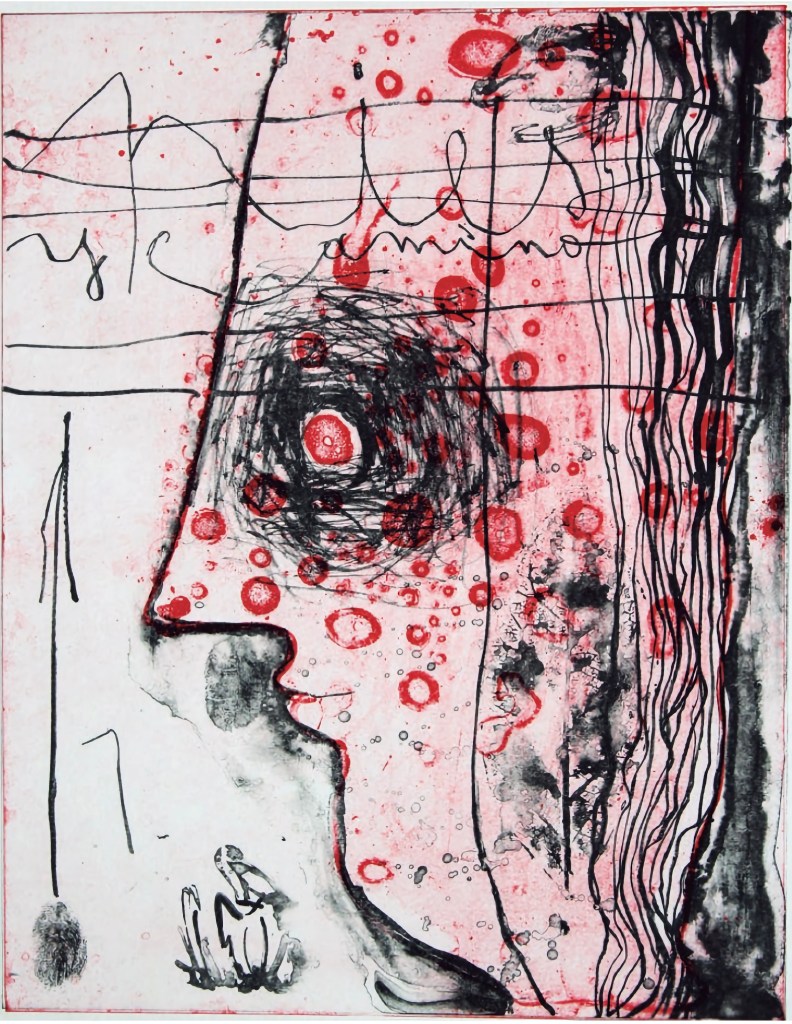
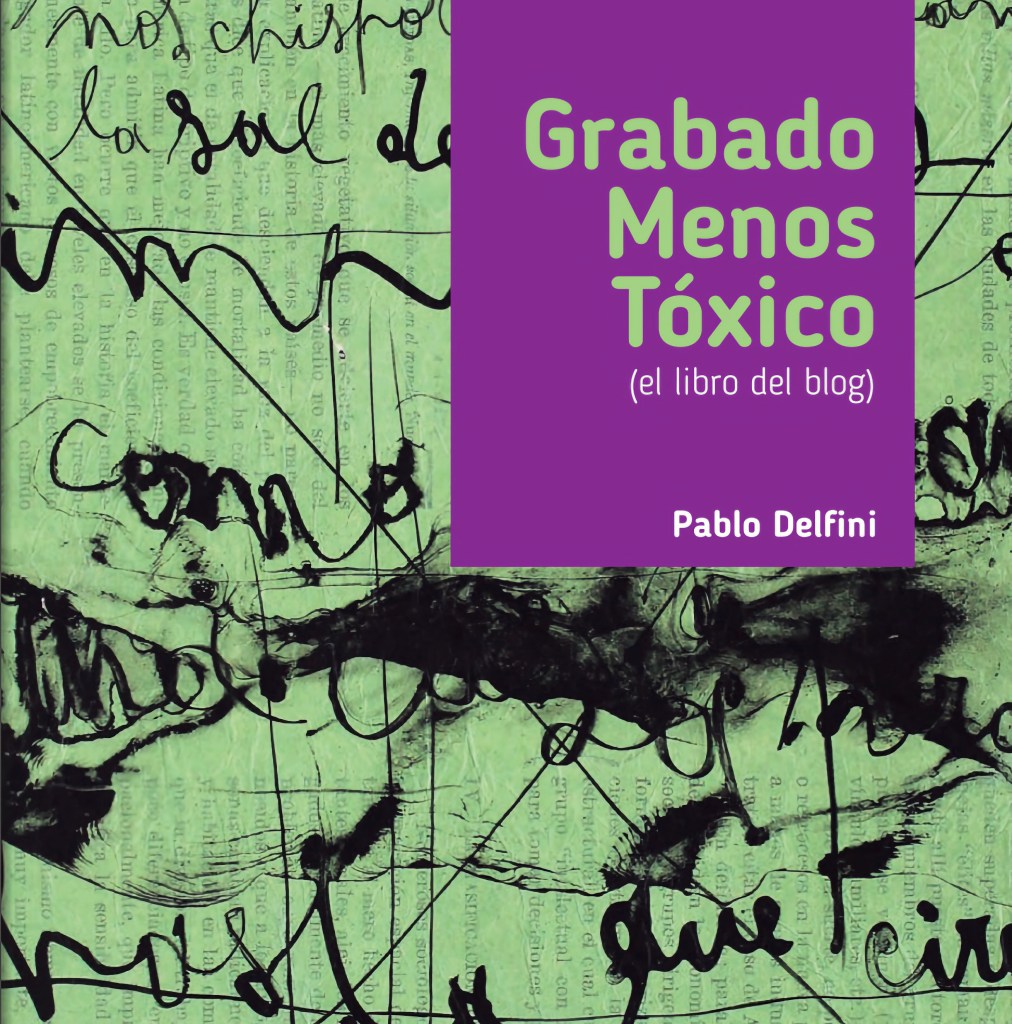
Flipbook Grabado Menos Toxico

using an etching press to print a lithographic plate

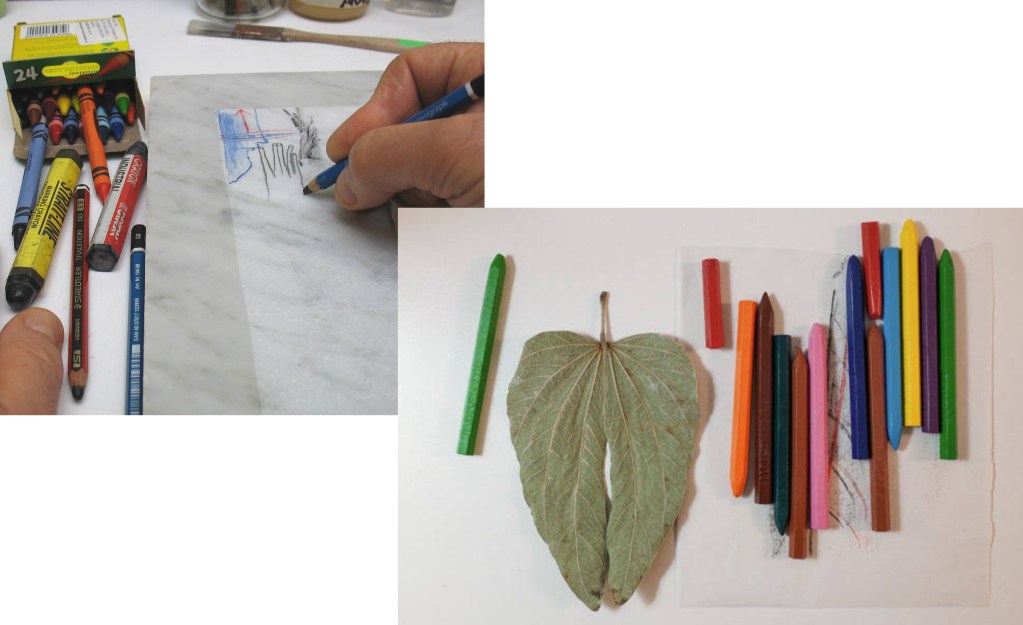
Innovative lithography using ground marble slabs; a selection of alternative greasy drawing materials
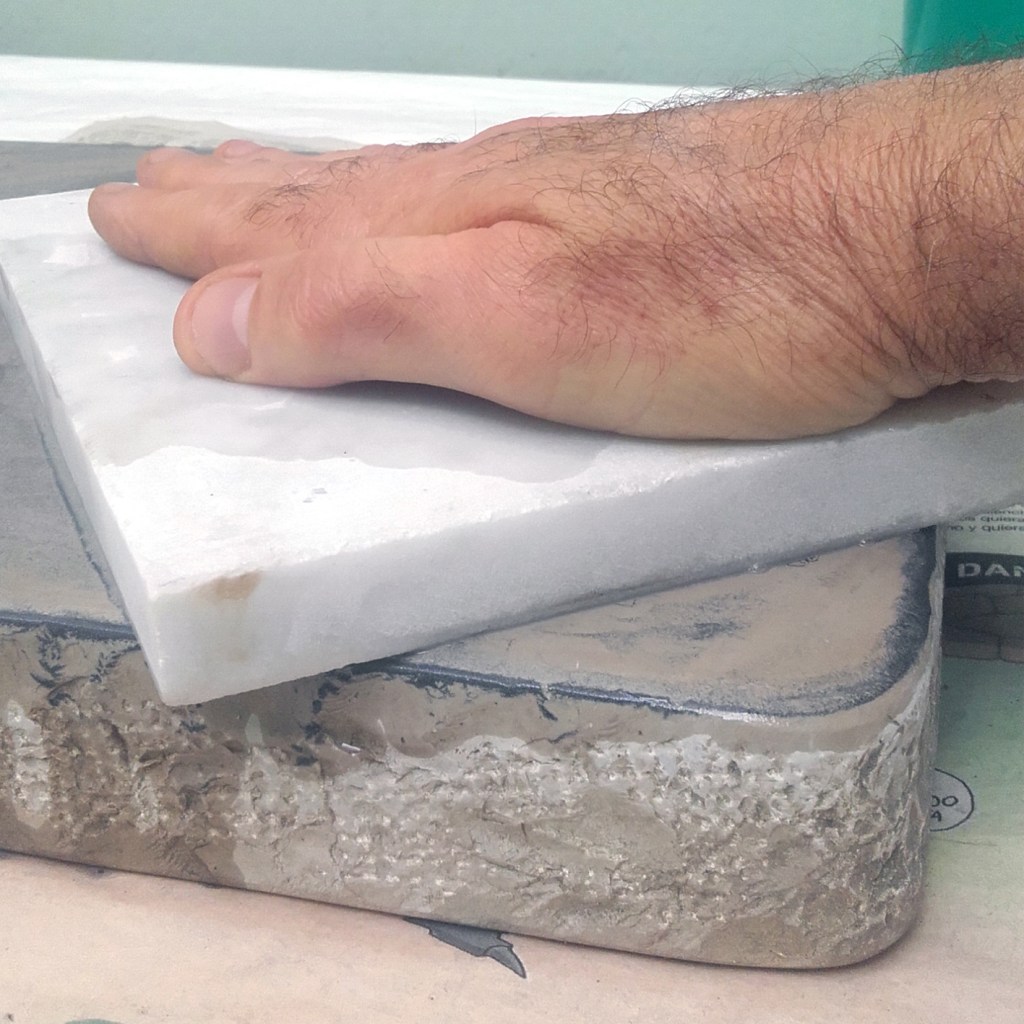
carborundum is used as a graining medium
Some thoughts and suggestions for safer lithography
by Pablo Delfini
I replace nitric acid in lithography on stone, marble, and aluminum. I use lemon juice or citric acid mixed with gum arabic in varying concentrations.
It is a very eco-friendly alternative that works very well. For the various processes of removing greasy drawing materials, I use vegetable oil—the same oil I use to clean rollers, spatulas, glass surfaces, and so on.
In waterless lithography, dissolving the silicone presents a challenge. An “eco-friendly thinner” sold in Argentina works very well for this purpose.
The best and most user-friendly option is an Italian thinner that Fabiola Mercandetti and I tested during a workshop in Rome.
For waterless lithography, it is best to draw using only water-based materials, avoiding those that dissolve in acetone.
Another new development is the method for cleaning waterless lithography plates after printing: using vegetable oil followed by soap and water.
Waterless lithography on Tetra Pak is an alternative option that allows for short print runs. I was recently able to improve upon this process by adapting the technique of Japanese artist Motomi Sunoda, who works with waterless lithography on paper using a shellac base. I adapted this method for thin recycled cardboard and Tetra Pak, and it works very well. I use an ink I make from instant coffee, which is the best drawing medium for these Tetra Pak and thin cardboard plates
For polyester lithography, I use the *frottage* technique with standard school wax crayons and with handmade crayons created by Mariel Bichi, an Argentine artist specializing in non-toxic printmaking. *Frottage* on polyester, works very well with wax crayons.
I also use toner washes on the polyester, fixed with nail polish remover as an alternative to heat.
Additionally, I have experimented with handmade toner crayons by Mónica Vidal—another Argentine non toxic artist—testing them on stone and marble; when fixed with acetone-free nail polish remover, they yield interesting results.
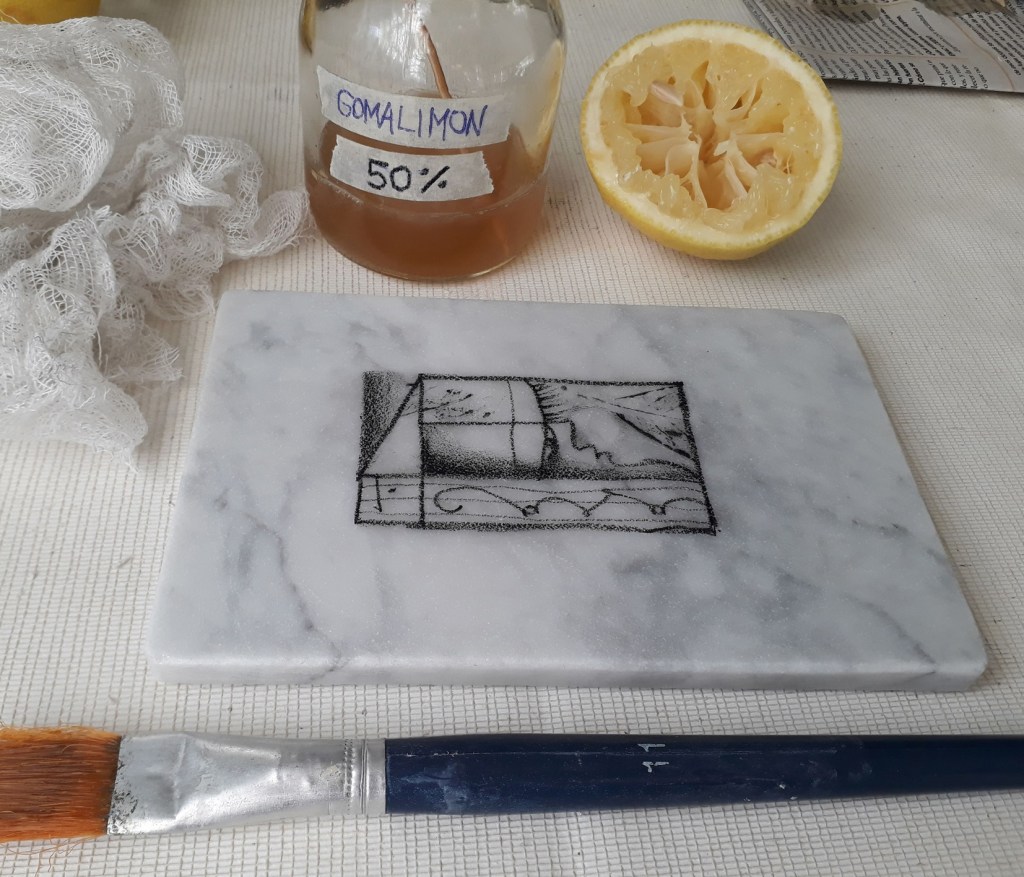
using a 50%/50% mixture of gum arabic and lemon juice as a fountain solution on marble
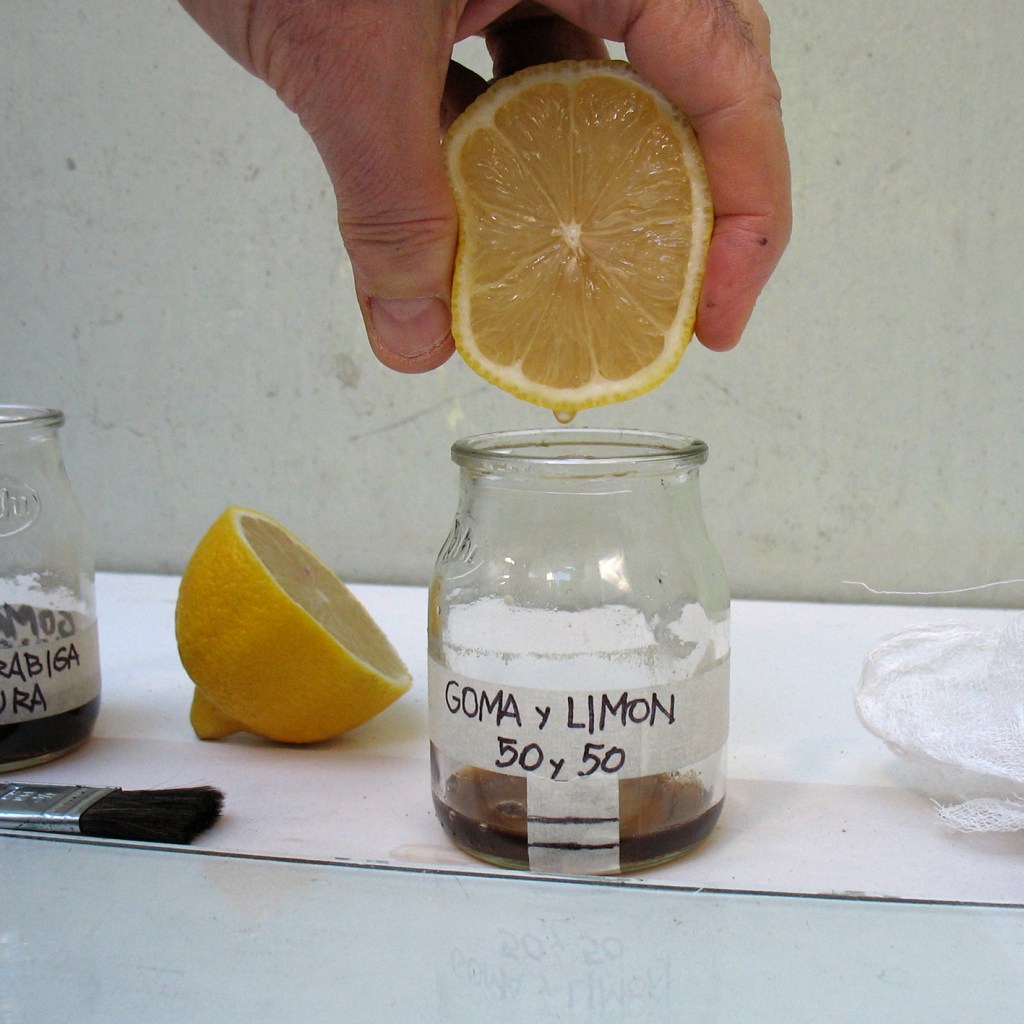

preparing an aluminum plate for gum-lemon lithographic printing
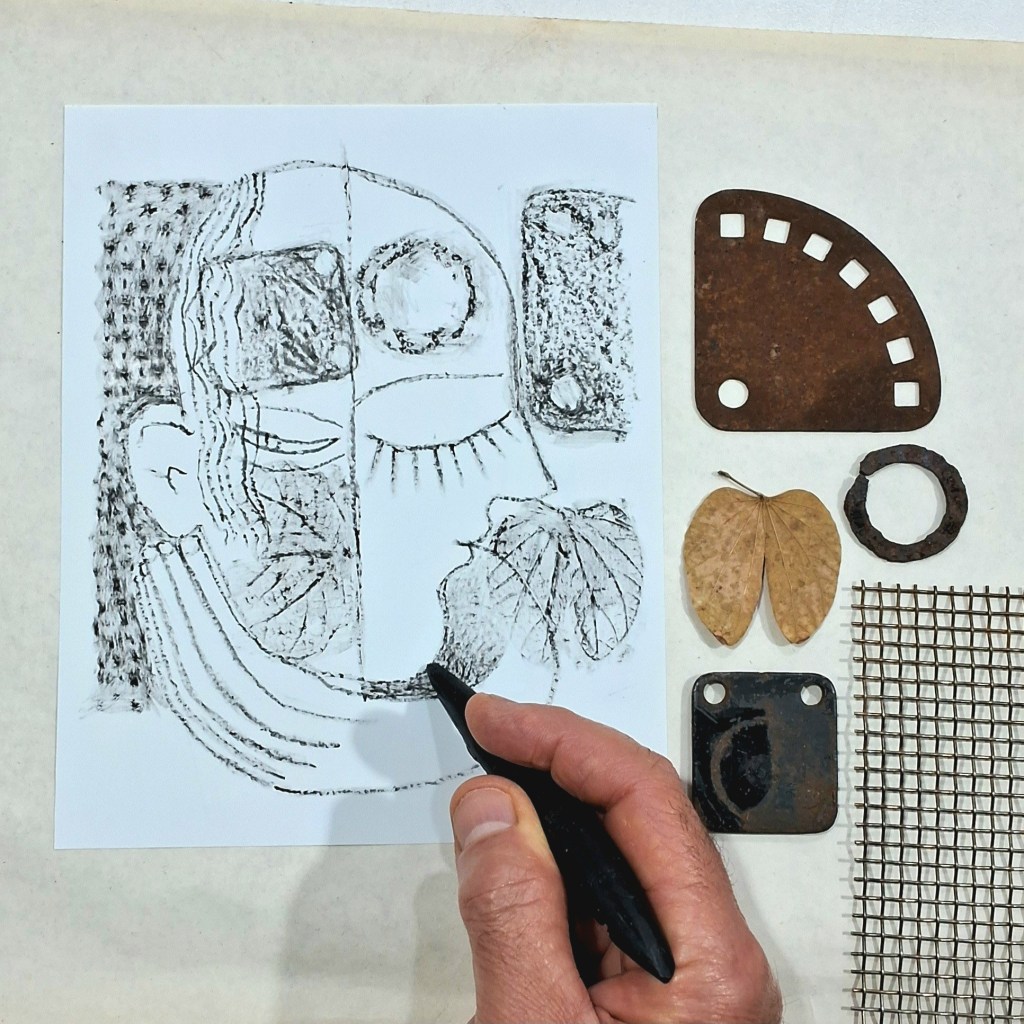
using an automatic frottage / rubbing approach with greasy crayon to record texture on a polyester plate

a polyester plate lithograph printed from the above plate
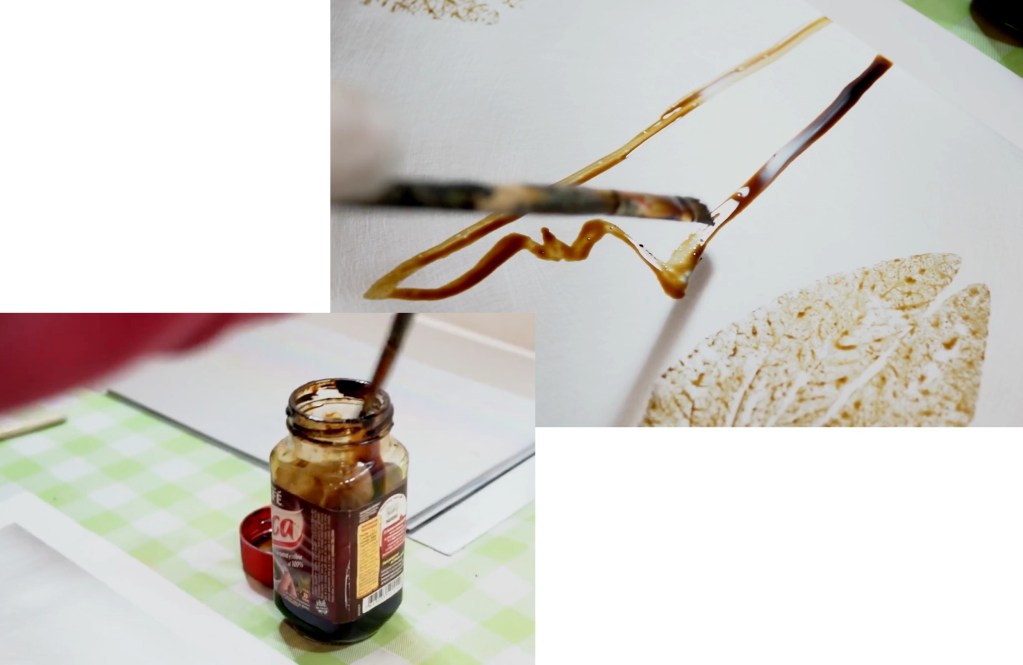
using instant coffee solution to paint on a lithographic plate
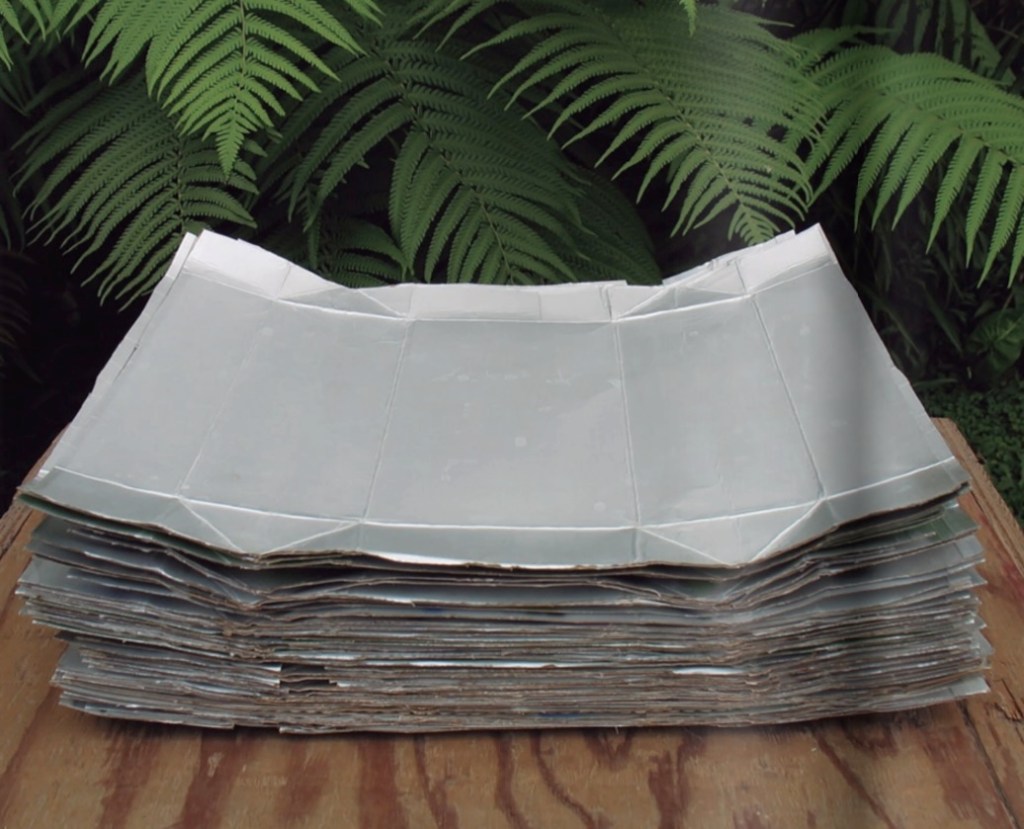
cut up TetraPak juice cartons, ready to be processed as unique lithographic plates

drawing lithographic marks on TetraPak media (coffee and 8B pencil); see print below for the finished art work
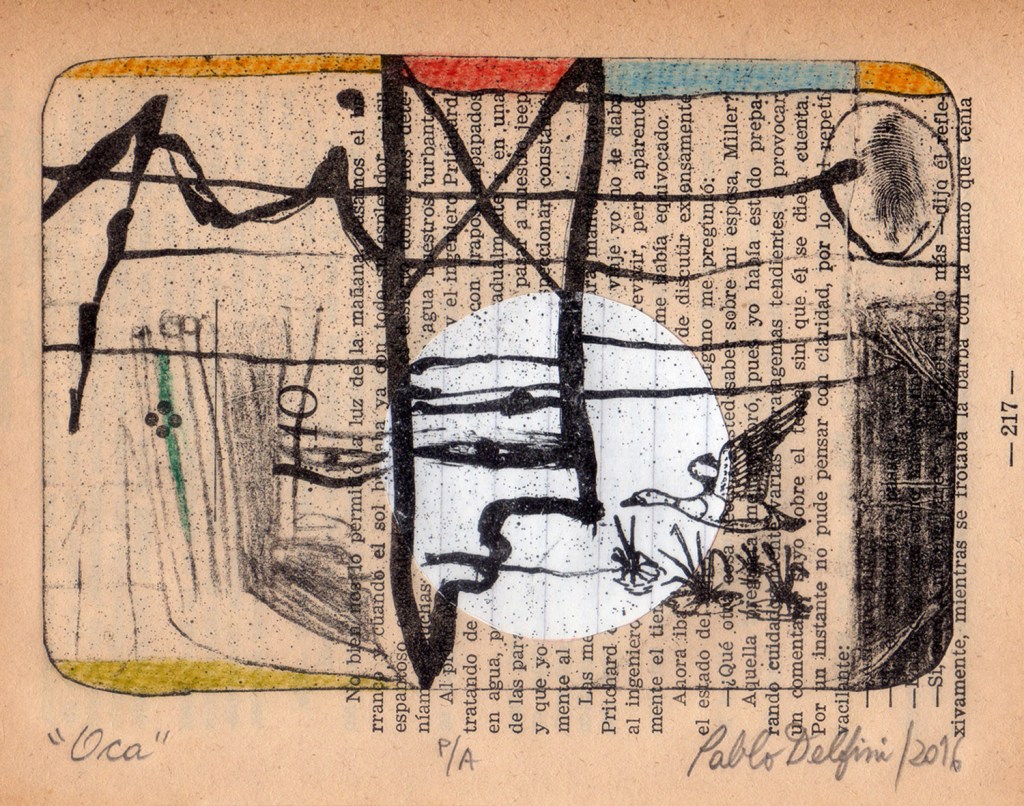

a TetraPak lithograph
Non-toxic printmaking does not invent new
printmaking techniques; rather, it repurposes
traditional methods by introducing technical
variations using sustainable materials.
Lithography is a prime example of how the basic
chemistry invented by Alois Senefelder in 1798
has evolved into new ways of working. From
stone to metal, marble, paper, cardboard, wood,
and polyester, lithography remains—as it has
been from the start—the beautiful experience of
creating multiple prints from a drawing made
directly onto the matrix.
I enjoy working with lithography using technical
variations that avoid acids, varnishes, and toxic
solvents. It is truly possible, healthy, and
environmentally friendly.
Pablo Delfini
Short biography
Pablo Delfini
born in Buenos Aires, Argentina, 1959. He graduated in printmaking from the Ernesto de la Cárcova School of Fine Arts in Buenos Aires. He manages a blog called Grabado menos tóxico, (Less toxic printmaking), sharing his research on environmentally friendly graphic techniques and processes. In 2021 he published the book Grabado Menos Tóxico (el libro del blog). He taught printmaking courses at universities, schools and private workshops in Argentina, Italy, Brazil,
Peru, Chile, Colombia. He is a member of Menostoxico Latinoamérica Group. In Venice and Rome he worked with the Gruppo GIRI, researching non-toxic printmaking techniques. Lives and works in Buenos Aires.
Website blog: https://grabado-menos-toxico.blogspot.com/