
More health-conscious and eco-friendly offset and industrial printing
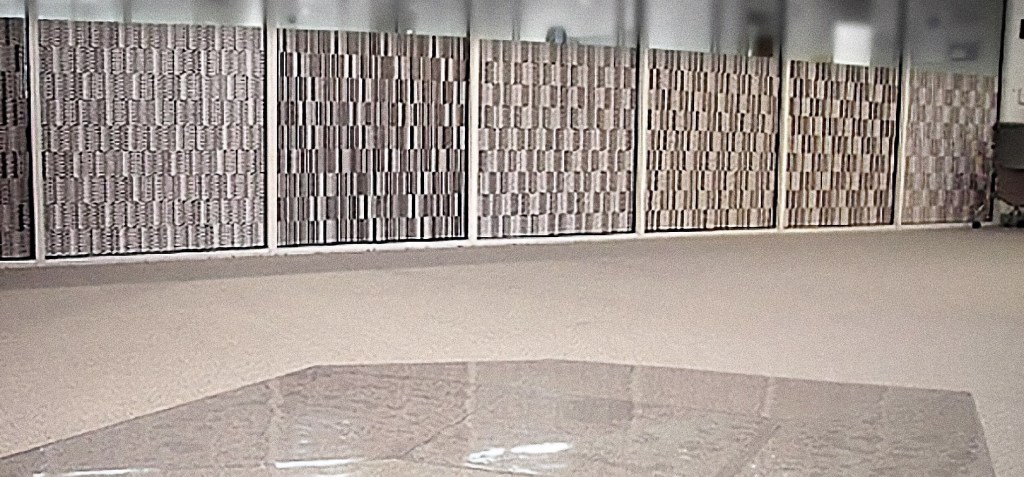
Installation of digital offset prints, 9 sequential modules, 6ft x 6ft ea., Eye Tricks, Walsh Gallery, NJ, 2007
© picture courtesy of Walsh Gallery
Industrial presses can be operated either with potentially harmful inks and solvents or with safer and eco-friendly alternatives. Safer products have gained a considerable share of the market, and initial quality issues have been overcome.

Felix Gonzalez Torres, untitled; the concept artist frequently offered free offset printed posters to gallery visitors
Nontoxic Offset Printing – Why?
The widespread and important technique of offset printing had throughout the 20th century a very high incidence of occupational sickness in professional printers. Below are two examples.
EXAMPLE No 1
Abstract.
‘Journal of Neurology, Neurosurgery, and Psychiatry, 1993
In an offset printing factory with 56 workers, 20 (36%) developed symptomatic peripheral neuropathy due to exposure to n-hexane. Another 26 workers (46%) were found to have subclinical neuropathy.’ ‘Peripheral neuropathy refers to damage to nerves of the peripheral nervous system, which may be caused either by diseases of or trauma to the nerve or the side-effects of systemic illness. (Wikipedia)’
Research Link- ‘N-hexane neuropathy in offset printers’
http://jnnp.bmj.com/content/56/5/538
EXAMPLE No 2
The May 1991 issue of The Daily Hazard, the newsletter produced by the London Hazards Centre, reported on the International Hazards Conference that was held in Copenhagen in September of 1990. Of note were reports that 600 (3.5% of the total) Danish printers have been compensated for brain damage due to organic solvent exposure, occurring primarily during cleanup.In efforts to find safer substitutes for the organic solvents, printers in Denmark have experimented with soya bean oil, vegetable oil, and coconut oil. While the oils had to be used in different ways, often in smaller quantities, to be effective, there was surprising success. The printers worked with a company to formulate “NatuRen” made up of soya and coconut oil which is being tested in 27 printing works. Laboratory workers have followed the printers’ example, and are experimenting with olive oil and coconut oil as substitutes. CSA encourages these substitutions, and also acknowledges that work processes and methods must be often changed in accordance with new products. Read more here:

small offset printing presses are designed for smaller print runs from say 2000 to 10000 copies while large industrial set ups can print much higher volume editions; all across the field the technology is increasingly being replaced by digital equipment
© image: Sven Teschke, (Wikipedia, GNU)
Offset Printing is a lithographic industrial printing method that became widespread throughout the 20th century. Offset was a further development of 19th century lithographic stone and plate printing that started with Alois Senefelders chemical process innovations in 1798.
Although large parts of the current printing market market have moved to a variety of direct digital methods, offset printing remains a viable and important technology for many print applications that require medium to high volume print runs.
Overall, the strongly solvent based nature of all lithographic printing methods, stone litho, offset, and letterpress, indicates a working environment that entails greater safety risks through VOC exposures than most of the modern digital methods do. Artists and industrial printers focusing on this medium need to ensure:
1) good ventilation and VOC fume extraction in their print shops, and mask wearing where VOC concentrations are high.
2) being mindful of the fact toxic exposures do not just occur from the many cleaning solvents which are required in offset, but also from the printing inks which often have a high VOC content, and may contain toxic pigments as well as heavy metal dryers.
3) Choosing specialist ‘greener’ inks and solvents can greatly reduce health risks in commercial offset printing.
4) Most 20th century ink and solvent formulations in offset are mainly based on mineral oil and other complex petroleum distillates, with the addition of heavy metal ink dryers, such as Cobalt or Manganese dryers, and these have been shown to cause cancer and neurological disease.
5) Today, there are a variety of non-petroleum, professional solvent and ink formulations that are safer for workers and better for the environment.
There are both traditional and modern materials and approaches that are intrinsically safer, and can be an essential part of a safer offset printing environment today:
- Linseed oil used to be the most common ingredient in Western ink formulations; toxicity is low
- Soy ink is a plant-based ink made from soybeans (Glycine max). Soy-based ink is environmentally friendly and provides precise colours. However, it is slower to dry than other organic inks, but can be modified for faster drying times; soy inks have been steadily developed since the 1970s
- Gum Arabic is a traditional staple binding agent and vehicle that was used in both Western and Eastern art and printing traditions for centuries if not millennia; gum arabic is a type of sugar-resin sap that has universal applications in ink and paint making, is both water and oil miscible, and has a very good toxicity and safety rating
- UV Curing Many modern printing inks are developed to allow for UV curing which is a safe and solvent free method for reducing print drying times.
- Low VOC There are many modern low-VOC solvents that have a much better health rating than the use of mineral spirits and High VOC products
- Since 1990 vegetable oil-based products have frequently been used for cleaning in offset environments; oils are much safer than VOC solvents
- Ventilation Even in low VOC printing environments it is an essential requirement to provide fresh air ventilation and fume extraction. Sometimes the wearing of organic respirators may be required regardless to protect workers from harmful vapors, even if these are hard to detect.
- Acrylic inks A very recent development in offset and newspaper printing, acrylic enhanced gum inks promise enhanced safety, fast drying times, and water resistance
- Use Polyester Plates on offset printing equipment for smaller print runs; these are easy to image on laser printers, and offer safety benefits
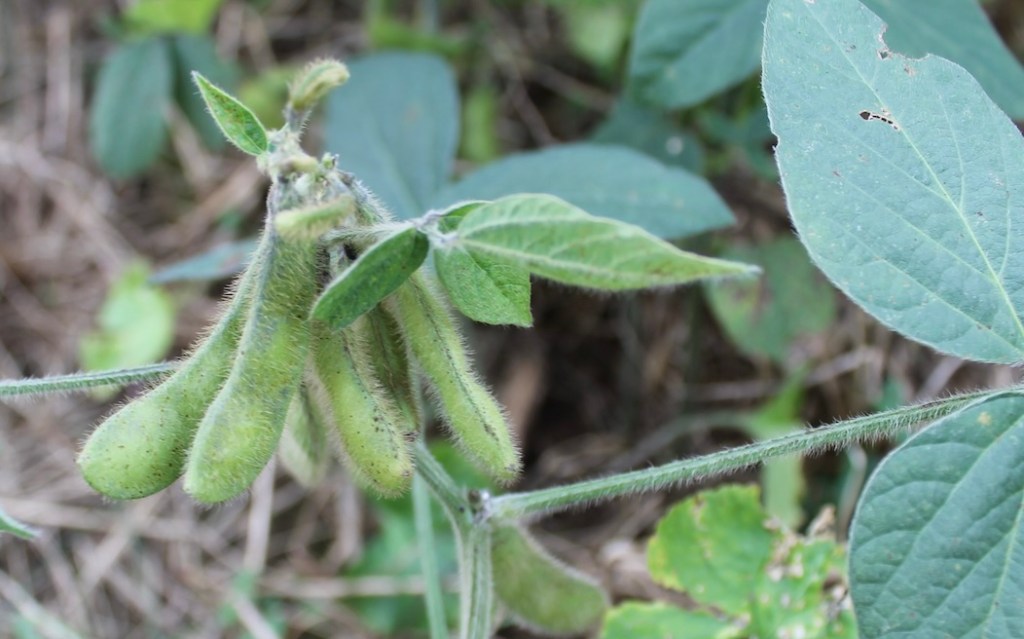
soy beans for industrial use
Selected Links
(https://soygrowers.com/soy-ink-seal/)
https://www.kingswoodinks.com/sheetfed-offset-ink/soy-based-offset-printing-ink-ecosoy-series.html
https://www.printarea.cn/news/the-current-status-of-soy-based-inks-in-offset-printing
NTP Technical Report on Toxicity Studies of Black Newsprint Inks;
key excerpts from an early study into ink toxicity. The study showed that regular exposure to carbon black printing ink causes skin cancer in mice.
NTP Technical Report on Toxicity Studies of Black Newsprint Inks Administered Topically to F344/N Rats and C3H Mice Joel F. Mahler, DVM, Study Scientist National Toxicology Program Post Office Box 12233 Research Triangle Park, NC 27709 https://pubmed.ncbi.nlm.nih.gov/12209169
Mr. Beliczky said reference should be made to the fact that carbon black, used in some black newsprint inks, contains polycyclic aromatic hydrocarbons (PAHs); he noted that the International Agency for Research on Cancer (IARC) lists some PAHs in oil as human skin carcinogens. Dr. Mahler said that references cited in the report confirm Mr. Beliczky’s comments.
Extensive experimental data demonstrate the carcinogenic potential of PAHs and/or petroleum products (Bingham et al., 1980; IARC, 1984), including many studies of mineral oil and carbon black, the major components of black newsprint inks. Generally, animal data show that the carcinogenicity of a particular mineral oil is related to its refining history; less refined oils have a greater carcinogenic potential (Bingham, 1988), presumably because they have larger amounts of PAHs.
Available data from animal studies with carbon black indicate that, although carbon black alone is not carcinogenic, solvent (benzene) extracts of carbon black are capable of inducing skin tumors following dermal exposure. Animal studies specifically examining the potential toxicity/carcinogenicity of printing inks are few. In a 1929 German study (Steinbruck, 1929), printing ink was applied to the dorsal skin of mice; 5 of 16 animals developed lesions described as “carcinomas.” However, given the weight of experimental evidence that petroleumderived compounds are carcinogenic to mouse skin and the mutagenicity for Salmonella of the 2 composite mixtures, it is predictable that newsprint inks would be carcinogenic in a chronic bioassay.
A previous NTP bioassay has demonstrated a positive skin tumor response following dermal exposure to a complex petroleumbased mixture containing aliphatic and aromatic hydrocarbons (NTP,1986), and the IARC (1984) has determined that there is sufficient evidence to consider untreated and mildly treated mineral oils carcinogenic to humans, although the evidence for carcinogenicity of highlyrefined oils is inadequate.
Longterm animal studies of USP grade mineral oil would be pertinent, to determine if this irritant compound would be carcinogenic despite the fact that it contains no measureable PAH. As has been pointed out, while the presence of PAH is strong evidence for carcinogenic potential, the absence of PAH does not preclude tumorigenic activity (Bingham et al.,1980). Polyester Plate Litho Litho Toner Wash Waterless Lithography Stone Lithography
Safer Offset Chemistry, some commercial examples
EVERGREEN PRINTING
(https://evergreen-printing.com/home/environmental-responsibility/chemicals/)
Minimizing the environmental impact of pressroom chemicals is a worker health & safety issue just as much as it is an environmental issue because workers have the greatest exposure to these toxic chemicals. Efforts to reduce the number of and toxicity of printing industry chemicals are not substitutes for having adequate ventilation and wearing personal protective equipment (PPE). My shop is well-ventilated and has air filtration. Moreover, I wear reusable nitrile or butyl gloves when handling chemicals and wear a half-mask respirator with organic vapor cartridges when appropriate. These practices stand in stark contrast to printing industry standards; most print shops don’t bother to educate their employees about chemical exposure or provide them with adequate PPE.
– ‘Böttcher 260’ Newspaper Roller and Blanket Wash Böttcher 260 wash is a very safe, low odor, non-hazardous wash formulated for the
newspaper industry. It is very mild on the rollers and blankets and it offers a much lower safety and health risk than traditional washes on the market. It
is a clear solvent with a pleasant odor. Flashpoint 203°F (http://www.bottcher.com)
Varn Pressroom Chemicals
– ‘Varn Safety UV Cleaner’ is one of the only effective cleaners for UV inks that does not rely upon harsh solvents.
Most UV washes contain large amounts of solvent EB. This is also known as 2-butoxyethanol or butyl cellosolve®. Varn Safety UV Cleaner does not
contain solvent EB, which is a hazardous air pollutant under the Clean Air Act. Varn Safety UV Cleaner appeals to the UV ink and coating user who
also requires a strong and safe cleaner.
– ‘Varn® VWM Wash’ is a water miscible, one step wash formulated to meet ecological requirements for safety in roller and blanket washes.
some UK government resources on Print Industry Safety
Printing – UK COSH advice; a selection of data sheets
- Safety requirements for using hand-fed platen (die-cutting) machines
- Handling newspaper and magazine bundles
- The guide to safe use of power-operated paper-cutting guillotines
- Guidance for the recovered paper industry – recover paper safely
Lithographic
P1: Manual film and plate development
Manual film and plate development (PDF)
This sheet describes good practice for manual film development and plate making. Consider using automatic processes to reduce the risk of skin exposure. It covers the points you need to follow to reduce exposure. It is important to follow all the points, or use equally effective measures.
P2: Automated film and plate development
Automated film and plate development (PDF)
This sheet describes good practice for automatic film and litho-plate development. Automatic processors help avoid skin contact. Use extraction for developer fumes. It covers the points you need to follow to reduce exposure. It is important to follow all the points, or use equally effective measures.
P3: Ink mixing and cleaning up
Ink mixing and cleaning up (PDF) This sheet describes good practice for the mixing of conventional inks (vegetable/mineral oil-based), UV-curable inks, cold-set inks and heat-set inks, and cleaning the mixing equipment. It covers the points you need to follow to reduce exposure. It is important to follow all the points, or use equally effective measures.
P4: Printing with conventional inks
Printing with conventional inks (PDF)
This sheet provides good practice for litho printing processes using conventional inks with or without isopropanol (IPA) damping. It covers the points you need to follow to reduce exposure. It is important to follow all the points, or use equally effective measures.
P5: Manual cleaning of presses (conventional inks)
Manual cleaning of presses (conventional inks) (PDF)
This sheet describes good practice for manual cleaning of presses using conventional inks, and blanket rejuvenation with cleaning chemicals such as solvent naphtha. It covers the points you need to follow to reduce exposure. It is important to follow all the points, or use equally effective measures.
P6: Automated cleaning of press (conventional inks)
Automated cleaning of press (conventional inks) (PDF)
This sheet describes good practice for automatic cleaning of presses using conventional inks, with cleaning chemicals such as solvent naphtha. It covers the points you need to follow to reduce exposure. It is important to follow all the points, or use equally effective measures.
P7: Printing with UV-curable inks and coatings
Printing with UV-curable inks and coatings (PDF)
This sheet describes good practice for printing with UV-curable inks where the ink-curing lamps generate ozone. Use extraction for any ozone produced. It covers the points you need to follow to reduce exposure. It is important to follow all the points, or use equally effective measures.
P8: Manual cleaning of presses (UV-curable inks and coatings)
Manual cleaning of presses (UV-curable inks and coatings) (PDF)
This sheet describes good practice for manual cleaning of offset presses using UV-curable inks, with cleaning chemicals such as solvent naphtha, high boiling point glycol ethers and water-based products. It covers the points you need to follow to reduce exposure. It is important to follow all the points, or use equally effective measures.
P9: Automated cleaning of presses (UV-curable inks and coatings)
Automated cleaning of presses (UV-curable inks and coatings) (PDF)
This sheet describes good practice for automatic cleaning of presses using UV-curable inks, with cleaning chemicals such as solvent naphtha, high boiling point glycol ethers and water-based products. It covers the points you need to follow to reduce exposure. It is important to follow all the points, or use equally effective measures.
P10: Printing with cold-set inks
Printing with cold-set inks (PDF)
This sheet describes good practice for litho printing using cold-set inks with or without isopropanol (IPA) damping. It covers the points you need to follow to reduce exposure. It is important to follow all the points, or use equally effective measures.
P11: Manual cleaning of presses (cold-set inks)
Manual cleaning of presses (cold-set inks) (PDF)
Description It covers the points you need to follow to reduce exposure. It is important to follow all the points, or use equally effective measures.
P12: Automated cleaning of presses (cold-set inks)
Automated cleaning of presses (cold-set inks) (PDF)
Description It covers the points you need to follow to reduce exposure. It is important to follow all the points, or use equally effective measures.
P13: Printing with heat-set inks
Printing with heat-set inks (PDF)
This sheet describes good practice for heat-set printing. Use extraction for solvent vapour. It covers the points you need to follow to reduce exposure. It is important to follow all the points, or use equally effective measures.
P14: Manual cleaning of presses (heat-set inks)
Manual cleaning of presses (heat-set inks) (PDF)
This sheet describes good practice for manual cleaning of presses using heat-set inks, and blanket rejuvenation with cleaning chemicals such as solvent naphtha. It covers the points you need to follow to reduce exposure. It is important to follow all the points, or use equally effective measures.
P15: Automated cleaning of presses (heat-set inks)
Automated cleaning of presses (heat-set inks) (PDF)
This sheet describes good practice for automatic cleaning of presses using heat-set inks, with cleaning chemicals such as solvent naphtha. It covers the points you need to follow to reduce exposure. It is important to follow all the points, or use equally effective measures.